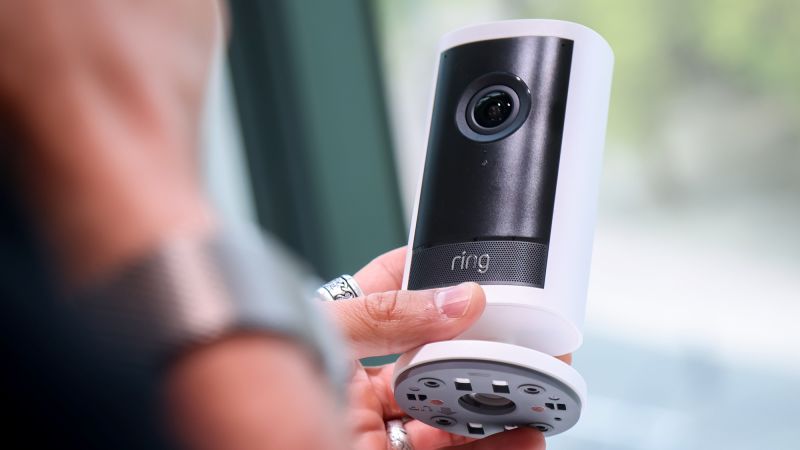
Ring, the Amazon-owned video doorbell company, has officially terminated its partnership with Flock Safety, a technology firm specializing in automatic license plate reading cameras. This decision, announced on Thursday, follows weeks of public backlash sparked by both the partnership and a Super Bowl commercial featuring a new lost pet feature, which raised concerns about potential surveillance.
The collaboration was intended to integrate Flock Safety’s technology into Ring’s Community Requests feature, a service that allows law enforcement agencies to request video footage from users for investigation purposes. However, in a statement on its website, Ring explained that the integration would require more time and resources than initially anticipated, leading to a mutual decision to cancel the partnership.
Josh Thomas, chief communications officer of Flock, echoed this sentiment, confirming to CNN that the end of the partnership was reached jointly by both parties. The cessation of this collaboration alleviates tensions that had been growing around Ring’s relationship with law enforcement, a longstanding issue for the smart camera company.
The concerns amplified after a report from 404 Media last year indicated that Flock’s technology had connections to immigration investigations, prompting significant unease among privacy advocates. Although Flock disputed these claims, the backlash intensified following the airing of Ring’s Super Bowl advertisement. Users expressed their discomfort over social media prior to the commercial, particularly in light of a viral post that falsely suggested that U.S. Immigration and Customs Enforcement (ICE) could access Ring cameras. This misinformation led several customers, including a longtime user from Florida, to cancel their subscriptions, fearing a breach of privacy.
Both Ring and Flock have clarified that they do not share access to footage with ICE, with Ring asserting that no videos were transferred to Flock under the partnership as it had not yet taken effect. Local law enforcement can still utilize the Ring Neighbors app to make requests related to active investigations, but only local agencies are authorized to make these requests, while federal entities like ICE are excluded.
Users maintain autonomy over their footage, with the option to ignore requests or contact law enforcement directly. Additionally, there is an option to disable Community Requests in the app’s settings. When users agree to share video, it is securely transferred to Axon Evidence, a third-party partner, before being delivered to the requesting law enforcement agency, which then controls access.
Flock has reiterated its lack of relationship with ICE, denying any direct access to its camera systems or data by federal agencies. Nonetheless, the 404 Media report also noted that local police departments have employed Flock’s technology in immigration-related investigations, prompting Flock to conduct an internal audit. This audit led the company to revoke access to data for 47 law enforcement agencies in Illinois due to improper use of its technology.
Flock’s CEO has emphasized that trust in law enforcement is crucial for community confidence regarding surveillance technologies. He mentioned that concerns about privacy often stem from broader trust issues with law enforcement rather than the specifics of technology used for surveillance.
In summary, the cancellation of the Ring and Flock partnership underscores ongoing discussions about privacy, surveillance, and the complexities of law enforcement collaboration in the digital age.