The ongoing turmoil in the cryptocurrency market is notably affecting regions in the United States where support for former President Donald Trump and his “Make America Great Again” movement runs deep. Following Trump’s victory in the 2024 presidential election, he garnered substantial backing from the cryptocurrency community. This group included both political supporters and speculative investors disgruntled by regulatory policies and rising inflation under President Joe Biden, which diminished the purchasing power of their dollar earnings.
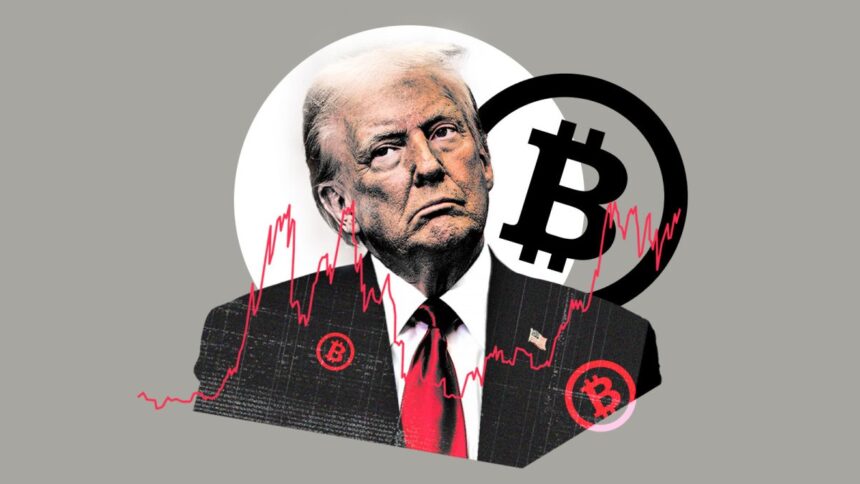
Trump campaigned on a promise to be the “crypto president,” leading many investors to anticipate that the value of their digital currencies would surge during his second term. However, while crypto ventures have reportedly boosted the Trump family’s wealth by over $1 billion since the 2024 election, many grassroots crypto investors are now nursing significant losses.
Since hitting a record high of $126,000 in October, the cryptocurrency market has suffered severe declines, with trillions wiped off its value. In that month alone, Bitcoin’s downward trend was spurred by Trump’s announcement of a sweeping 100% tariff on Chinese imports and the potential for stringent export controls on crucial software. Presently, Bitcoin has fallen 24% this year and is trading around $67,000, down from approximately $70,000 at the time of Trump’s election. Other cryptocurrencies are similarly struggling, with Ethereum down by a third and Solana losing 36%.
Coinbase, the largest crypto exchange in the U.S., recently reported an unexpected quarterly loss, attributing this to reduced trading volumes as market sentiments falter. Steven Steele, the marketing director for the “Maga” memecoin—a crypto project inspired by Trump—expressed disappointment over the market’s direction, noting that the launch of Trump and Melania’s memecoins just before Inauguration Day had temporarily attracted liquidity away from other projects.
Despite initial peaks in the valuation of Trump’s memecoins following their launch, neither has recovered, leaving many retail investors disillusioned. Steele described the current market landscape as one still in recovery from the saturation caused by high-profile launches.
The Trump administration had made strides to appear crypto-friendly; it appointed Paul Atkins, a pro-crypto regulator, as chair of the Securities and Exchange Commission and passed regulations for dollar-pegged tokens. However, many are uncertain whether additional supportive measures will materialize. Trump had previously generated excitement with promises of a national bitcoin stockpile but failed to initiate widespread government purchases of Bitcoin despite signing an executive order related to assets seized in criminal cases.
Industry observers, including Joe Lubin, co-founder of Ethereum and CEO of Consensys, suggest that recent market disruptions resulted from forced liquidations that occurred in October, contributing to Bitcoin’s recent detachment from stock market trends.
Meanwhile, analysts point to growing competition from prediction markets as a factor adversely affecting crypto trading. These platforms have gained popularity, particularly among younger users, potentially diverting attention from cryptocurrencies. Byron Gilliam, a markets strategist, noted that many individuals who once engaged with memecoins are now shifting their interests toward these emerging platforms.
The skepticism in crypto markets is echoed by Standard Chartered, which revised its Bitcoin price forecast downward, predicting volatility alongside continued price declines leading to a potential stabilization at around $50,000. Their analysis indicates that the typical cryptocurrency investor is currently at a loss, with an average entry price near $90,000.
Internationally, Trump has faced criticism from the crypto community, with influencers expressing their dissatisfaction with the outcomes of his presidency on the cryptocurrency landscape. Despite the mixed sentiments surrounding Trump’s influence, experienced investors maintain their belief in the long-term viability of crypto assets, suggesting that the evolution of the market reflects broader shifts rather than personal accountability from the former president.
Some industry veterans argue that while Trump may frequently tout his intentions, the maturation of the crypto market is largely independent of political leadership. Observers note that fundamental changes in investor behavior and external market factors are significantly shaping the current economic landscape, making it challenging to attribute the fortunes of digital currencies to any single political figure.