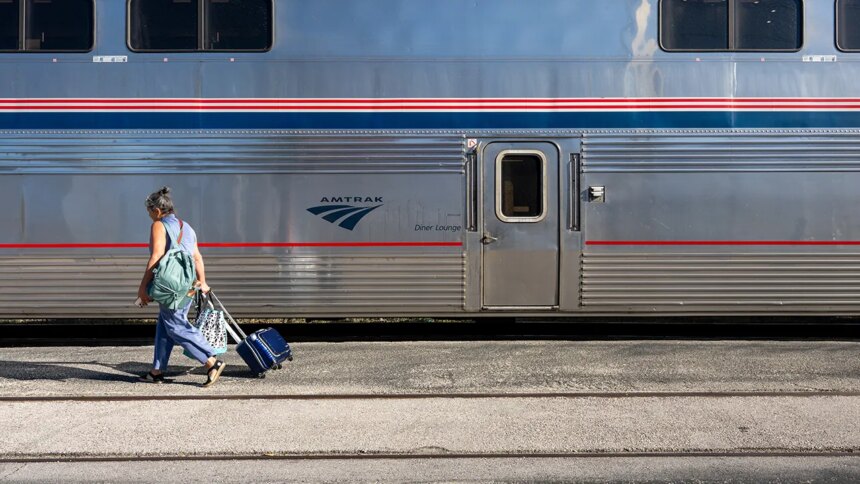
Amtrak is set to introduce a brand-new fleet of passenger trains this summer as part of a significant modernization effort, replacing aging rail cars that have been in service for up to 50 years. The new trains, referred to as Airo, are part of an $8 billion investment for 83 trains manufactured by Siemens in California. This overhaul marks the largest fleet replacement since Amtrak’s founding in 1971.
During the official introduction of the Airo fleet, Amtrak President Roger Harris emphasized the importance of this initiative, stating, “These trains represent the next step in Amtrak’s modernization of our entire fleet. They are made right here, in America by America for Americans.”
This modernization comes at a time when Amtrak is experiencing record ridership numbers, with 34.5 million passenger trips reported for 2025. The Airo trains are set to enhance services across several key corridors, starting with the Pacific Northwest. The first Airo trains will debut on the Amtrak Cascades route, which connects cities like Seattle, Portland, Vancouver, and Eugene. Eight trainsets are allocated for this particular route, with additional services planned for the East Coast, including the busy Northeast Regional line, which is expected to see testing later this year and passenger service by 2027.
Travelers can anticipate several notable changes within the new train cars. For instance, the redesigned interiors will feature larger windows, improved lighting, and overhead digital screens providing route information. Each seat will come equipped with standard power outlets, USB-C ports, individual reading lights, adjustable headrests, and larger tray tables. The coach class will showcase a two-by-two seating arrangement, while business class will offer a more spacious two-and-one layout.
One unique design element of the Airo trains is the seating mechanism. Instead of reclining backward as in traditional trains, the new seats slide forward to adjust their angle, a design that has drawn mixed feedback. Some reviewers have expressed concerns regarding legroom when reclining, particularly for taller passengers.
Additionally, the new trains will include upgraded accessibility features, such as built-in motorized wheelchair lifts, wider aisles in select cars, and accessible café cars and restrooms designed to accommodate wheelchair users comfortably. While the Airo trains will maintain speeds of up to 125 mph, they are not classified as high-speed rail; however, their ability to transition between diesel and electric power without requiring engine changes could lead to time savings on certain routes.
The seating capacity of each Airo train on the Cascades route is projected to hold up to 300 passengers, a significant increase from the approximately 168 seats available on current models. Although no fare increases have been officially announced in connection with the rollout of the Airo fleet, some customers have speculated that the new, upscale design and amenities might result in higher prices.
Funding for this extensive upgrade includes a portion derived from the federal Infrastructure Investment and Jobs Act. This initiative aligns with Amtrak’s broader strategy to modernize its network and has followed the recent deployment of NextGen Acela trains on the Northeast Corridor, reflecting Amtrak’s commitment to enhancing its passenger service offerings.