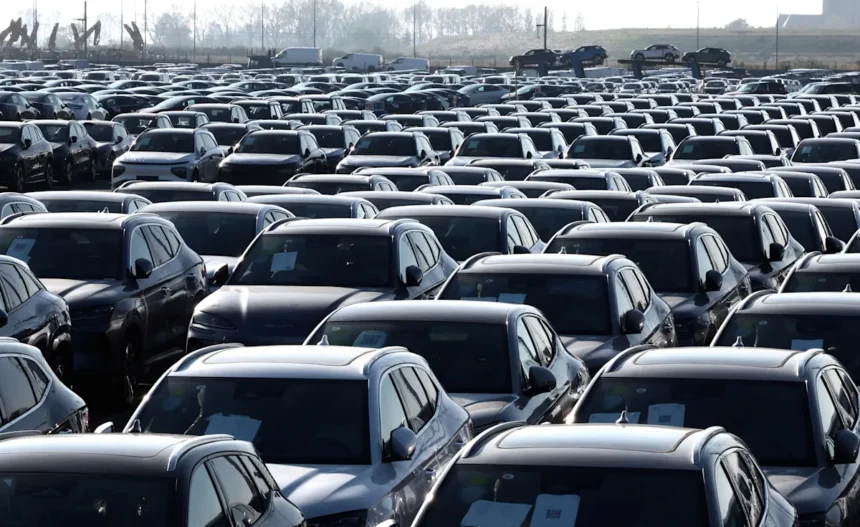
Western automakers are increasingly voicing concerns about the competitive threat posed by Chinese manufacturers, insisting on the need for protective measures to ensure the viability of U.S. domestic production. The Alliance for Automotive Innovation (AAI), a trade group representing major players including the Big Three automakers, has underscored the urgency of this situation in light of a recent House hearing discussing the impact of Chinese vehicles on the U.S. auto industry. The AAI called on Congress to uphold the Biden administration’s restrictions on importing specific technologies and software from China, effectively blocking the entry of vehicles from Chinese manufacturers into the U.S. market.
Rivian, an electric vehicle (EV) manufacturer gearing up for the launch of its new entry-level R2, is also mindful of the challenges posed by Chinese competition. CEO RJ Scaringe highlighted two critical factors that contribute to the cost advantages enjoyed by Chinese automakers: a significantly lower capital cost structure, often subsidized by the Chinese government, and far cheaper labor costs—estimated at a quarter to a fifth of what U.S. manufacturers face. Currently, existing tariffs on Chinese vehicles provide a buffer that equalizes costs, but Scaringe cautioned that this is only a temporary solution.
Ford’s CEO, Jim Farley, also expressed concerns regarding the rising influence of Chinese manufacturers. He noted that while Chinese EVs have not yet dominated the U.S. market, their presence is rapidly expanding globally, particularly in Europe, where they captured approximately 6.1% of the market last year—an impressive rise from 3.1% just a year prior. Despite high tariffs on Chinese EVs entering the European market, the exemption for hybrid vehicles has further complicated the competitive landscape.
Farley has previously described Chinese automotive companies as an “existential threat” to the U.S. market, warning that their government-backed subsidies and advanced manufacturing practices could severely undermine local industry and labor. He reiterated the need for a fair competitive environment.
On a strategic note, Ford is exploring potential partnerships, reportedly engaging in discussions with Chinese tech giant Xiaomi for an EV collaboration, although both companies have denied any confirmed agreement. There have also been talks with BYD for battery supply arrangements.
General Motors (GM) is grappling with the implications of the Canadian government’s recent trade decision, which allows the import of 49,000 Chinese-manufactured EVs annually. CEO Mary Barra candidly expressed her confusion over the decision and the potential competitive challenges it could create, particularly as GM has its own joint ventures in China.
As China’s domestic market reaches saturation, there are increasing alarms about its aggressive expansion into global markets, including Canada and several South American countries. The Center for Automotive Research has pointed out this trend, highlighting the necessity for U.S. and European manufacturers to strategize effectively to safeguard their market positions.
Stellantis, the most European-centric of the Big Three, is echoing these concerns as well. CEO Antonio Filosa is rallying for legislative measures that would bolster local production in Europe in response to the influx of cheaper Chinese imports. He, along with Porsche CEO Oliver Blume, has advocated for the European Union to adopt carbon incentives for domestically produced vehicles. Their collaborative op-ed stressed the urgency of this issue in the context of growing geopolitical rivalries and the need for the EU to act decisively to protect its automotive industry and job market.
The unfolding landscape in the auto industry underscores a growing sense of urgency among Western automakers to address the competitive threat posed by Chinese manufacturers, not only to sustain their operations but also to ensure the economic health of the regions in which they operate.