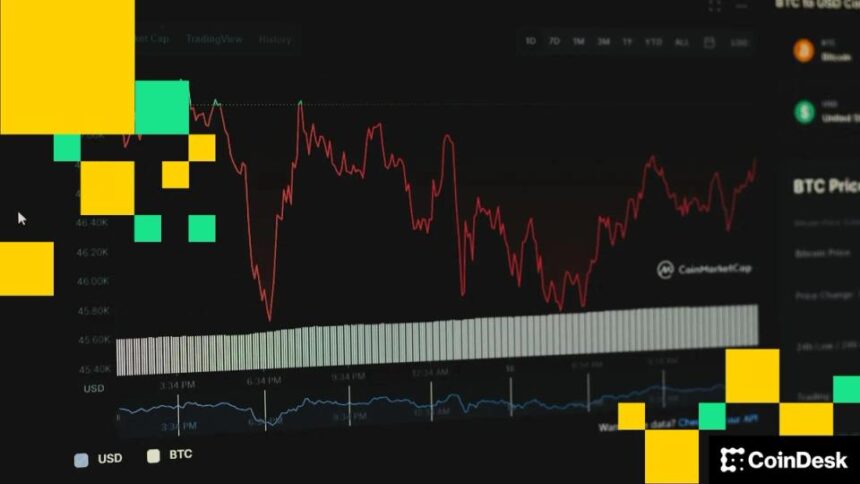
The cryptocurrency market experienced significant downturns on Monday, with Bitcoin, the leading digital asset, dropping to approximately $68,200—a decline of nearly 3% in just 24 hours. Major altcoins like XRP and Ether also faced notable losses, with XRP trading at $1.4879 and Ether at $1,986.24. The losses affected a staggering 85 out of the top 100 cryptocurrencies by market capitalization.
Privacy coins such as Monero and Zcash bore heavier losses, down by 10% and 8%, respectively. The CoinDesk Smart Contract Platform Select Capped Index, which tracks smart contract tokens, decreased nearly 6%, contributing to a substantial year-to-date decline of 28%. This disappointing market performance comes amidst previously optimistic expectations stemming from last week’s weak U.S. Consumer Price Index (CPI) data, which had hinted at potential rate cuts by the Federal Reserve.
The CPI growth rate was reported at 2.4% year-on-year for January, a decrease from 2.7% in December. This led to speculation about at least two 25 basis point rate cuts this year. As a result, the yield on the 10-year U.S. Treasury bond fell to 4.05%, marking its lowest point since early December. Bitcoin had briefly rallied from around $66,800 on Friday to over $70,000 over the weekend, but failed to maintain this momentum.
Vikram Subburaj, CEO of the regulated Giottus exchange in India, attributed the inability of Bitcoin and other cryptocurrencies to sustain positive momentum to selective demand. He noted that risk appetite remained cautious, influenced by macroeconomic factors. “In derivatives, the market continues to behave as if it is ‘de-leveraging first, asking questions later,’” Subburaj stated. He emphasized that while some traders are willing to buy dips, their activities are limited to specific price levels.
Looking forward, traders are preparing for a week filled with macroeconomic data. Key events include the minutes from the January Fed meeting and the release of the core Personal Consumption Expenditures (PCE) price index, which is the Fed’s preferred inflation gauge. Dessislava Laneva, an analyst at Nexo, highlighted the importance of the PCE inflation data for market positioning, particularly in light of the recent CPI results, indicating that inflation pressures are still present despite signs of gradual disinflation.
In traditional markets, Mark Nash of Jupiter Asset Management has recently shifted his stance on the Japanese yen, forecasting an 8% to 9% appreciation, especially against the Swiss franc. Notably, the correlation between the yen and Bitcoin has reached a historical high, suggesting that any strength in the yen could serve as a significant catalyst for Bitcoin bulls. As the week unfolds, market participants will continue to assess these developments closely to navigate the changing economic landscape.