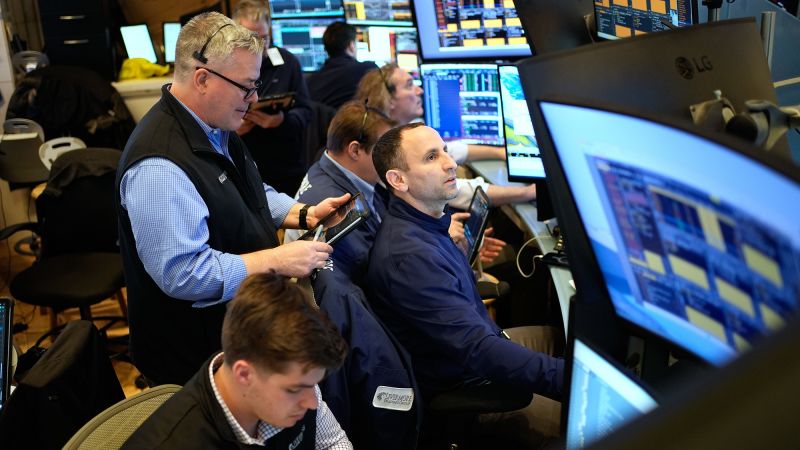
A notable sell-off swept through the software, real estate, and trucking sectors recently, raising concerns among investors about the potential disruptive impact of artificial intelligence (AI) on various industries. Analysts suggest the current market volatility may not stabilize soon, as fears of AI disruption continue to intensify.
Initially, software stocks faced the brunt of these apprehensions, but the anxiety quickly extended to insurance companies, brokerage firms, real estate services, and logistics. Mohit Kumar, a strategist at Jefferies, noted that the market appears to be reacting with a “shoot first, ask questions later” mentality, affecting any sectors suspected to be vulnerable to AI advancements.
The decline in stock prices underscores a significant shift in investor sentiment. AI, which had previously fueled substantial gains in technology and other sectors, is now perceived as a potential drag on certain areas of the market.
On February 9, shares of major insurance brokers dropped sharply following the announcement of a new insurance application from Madrid-based startup Tuio, which utilizes ChatGPT technology. This innovation raised alarms that AI could disrupt existing business models. Subsequent declines were seen in shares of professional services and insurance firms, with Marsh shares tumbling 7.5% and Arthur J. Gallagher shares plummeting nearly 10%.
Despite the significant sell-off, Brian Meredith, an analyst at UBS, suggested the market reaction was exaggerated, asserting that insurance brokers will continue to be essential players in household financial decisions and that AI is unlikely to completely overhaul the industry.
The financial sector faced similar challenges after tech startup Altruist launched a new tax-planning feature utilizing AI. The development fueled speculation that brokerage and wealth management services might be at risk of heightened competition. This led to significant drops in shares of Charles Schwab, which fell 7.42%, alongside declines in LPL Financial and Raymond James shares.
The real estate industry also experienced turbulent days, with companies like Cushman & Wakefield seeing their shares fall sharply by 13.8% one day and 11.5% the next. Other firms, including CBRE Group and Jones Lang LaSalle, faced similar fates. Analysts indicated that the market is audibly questioning the sustainability of high-fee, labor-intensive business models amid the AI-driven landscape. Some experts worry that AI could not only challenge traditional real estate operations but might also reduce overall demand for office space as technology evolves to replace jobs.
On Thursday, the Dow Jones Transportation Average witnessed a significant decline of 4%, marking its worst performance since April. This setback was attributed to Algorhythm Holdings’ announcement of a new AI tool aimed at optimizing trucking efficiencies. The market reacted sharply, with RXO shares dropping over 20% and C.H. Robinson Worldwide’s shares falling nearly 15%. C.H. Robinson representatives countered concerns by emphasizing their long-standing leadership in AI and confidence in its positive impact on their performance.
The quick market movements, sparked by a company that previously specialized in karaoke machines now pivoting to AI logistics, may highlight the current fragility of investor sentiments. Jim Reid, Deutsche Bank’s Global Head of Macro Research, remarked on the remarkable influence a relatively small-cap firm could exert on a multi-billion dollar industry.
Senior global strategist Angelo Kourkafas noted that while fears of AI disruption are prevalent, they often lean towards speculation rather than being grounded in actual revenue impacts. He acknowledged the short-term anxieties facing various industries but suggested that many companies are exploring innovative ways to enhance their offerings in response to AI developments.
However, Jonathan Krinsky, BTIG’s Chief Market Technician, expressed concern over the extreme fluctuations in individual stocks motivated by fears of AI disruptions, signaling that the broader market might be at risk if this pattern continues.