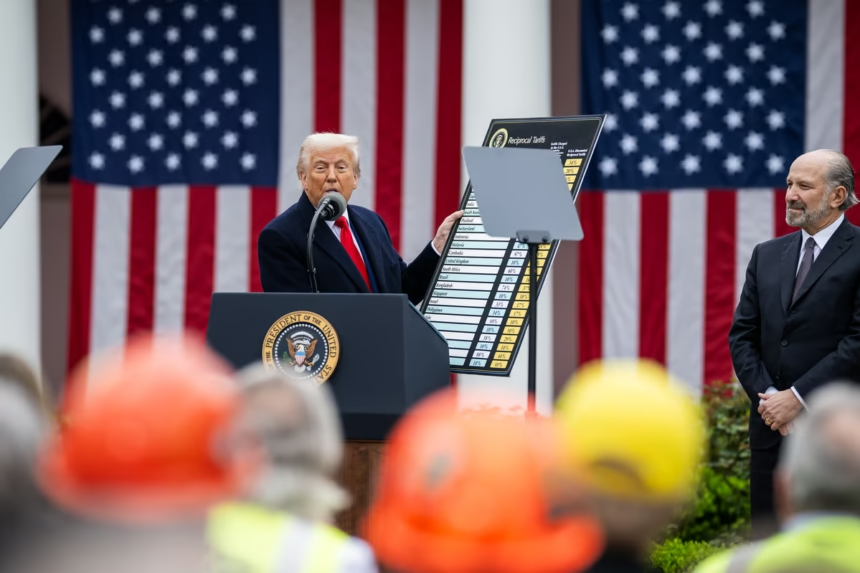
Stock prices have recently seen a notable increase, reflecting the ongoing economic impact of tariffs as they begin to materialize. The initial repercussions of President Trump’s tariff announcements last April were stark, with the S&P 500 witnessing one of its most significant two-day drops on record. The Nasdaq Composite fared even worse during this period. The market narrowly avoided a bear market as the president retracted many of the tariffs proposed just days earlier.
Although many tariffs eventually went into effect with certain modifications and exemptions, the resulting effects on the stock market have been evident but not as catastrophic as initially feared. As the influence of these tariffs starts to appear in economic data, analysts predict a significant impact on future stock returns, with share prices and valuations climbing to concerning levels since the tariffs were first suggested.
One of the primary issues with President Trump’s tariff implementation is the misinterpretation of who bears the financial burden. Despite Trump’s assertions that foreign suppliers would absorb the costs, a recent study by the Kiel Institute revealed that U.S. businesses and consumers are shouldering 96% of these tariff costs. Importers have reduced their shipment volumes, indicating a decrease in final sales to consumers. Earlier research from Harvard and University of Chicago Business Schools corroborates these findings, further supported by Goldman Sachs economists who estimate that U.S. consumers will bear 55% of the tariff costs, with businesses absorbing another 22%. This burden could escalate by 2026, as more companies are expected to pass on price increases to consumers.
The implications of rising prices are troubling for both the economy and the stock market. The Yale Budget Lab projects a negative impact of 0.4 percentage points on real GDP in 2026 due to tariffs, as well as a 0.6 percentage point increase in unemployment rates. This economic slowdown became apparent in the December retail sales report, which showed stagnant spending compared to prior months, falling short of analysts’ expectations for growth.
Typically, a weakening economy creates headwinds for stock prices, which are often based on anticipated future earnings. The current market condition is concerning, particularly as valuations are deemed high. The S&P 500 is currently trading with a cyclically adjusted price-to-earnings (CAPE) ratio of 40, a figure reminiscent of the dot-com bubble at the turn of the century. Historically, higher CAPE ratios correlate with lower future returns, raising flags for the prevailing market situation.
In this context, the upcoming challenge for investors will be justifying the lofty valuations of major companies amid the economic pressures created by tariffs. Without robust earnings growth, especially with a weakening consumer base, sustaining these valuations may prove difficult.
For investors looking for opportunities, despite the overall expensive market condition, there are still sectors worth exploring. One immediate consequence of the tariff announcements has been the depreciation of the U.S. dollar against foreign currencies, largely benefiting companies with substantial international business. According to data from FactSet Insight, firms that derive most of their revenue from overseas have reported stronger earnings growth compared to those focused domestically.
Moreover, investors might find value in international markets, as European and Japanese stocks do not carry the same high valuations that characterize U.S. equities. Thus, looking abroad may yield fruitful investment options.
In summary, while the broader stock market appears expensive and is beginning to feel the pressure of tariff impacts, long-term investors can still uncover meaningful opportunities, ensuring a focus on sustainable growth amid fluctuating market conditions.