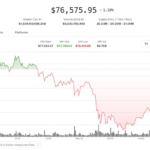
Bitcoin has significantly declined, showing a drop of 52.44% from its all-time high reached in October 2021. Currently, it trades at $67,621, down 1.70% in the last 24 hours alone. Traders have noted that the cryptocurrency is perilously close to the 2018 bear market drawdown of 56.26%. If February closes with losses, Bitcoin would mark five consecutive months of declining value—its longest losing streak since the worst market downturn in June 2018.
In the past 24 hours, the wider crypto market has experienced a 1.33% contraction, bringing the total market capitalization to $2.33 trillion. The Fear & Greed Index, which measures market sentiment, has marginally increased from 8 to 12 points, yet it still signals “extreme fear” among investors.
Market dynamics remain shaky, with the S&P 500 and Nasdaq also facing downturns due to uncertainty in the tech sector, exacerbated by Microsoft’s unexpected 10% drop despite reporting strong earnings. Precious metals have experienced volatility as well; silver saw its steepest one-day decline since 1980, plummeting approximately 31% on January 30.
Liquidations in the derivatives market continue to exert pressure on prices. Data from Coinglass indicates that since January 12, bear liquidations have consistently outnumbered bullish positions, which has added to the market’s instability.
On the Myriad prediction market, created by Decrypt’s parent company, traders believe there is a 60% chance Bitcoin will hit $55,000 before it reaches $84,000, indicating a shift in sentiment towards bearish expectations for Bitcoin’s near-term future.
Technical analysis further paints a concerning picture for Bitcoin. Currently, Bitcoin is trending sideways after a recent spike on February 6. The price remains below both the 200-day and 50-day exponential moving averages, which signifies bearish momentum; these averages serve as resistance levels where sellers typically emerge. The Relative Strength Index (RSI), which tracks buying and selling momentum, stands at 34.7, indicating modest bearish conditions, albeit not at extreme oversold levels.
The Average Directional Index (ADX) presents another layer of urgency, sitting at 56.4, well above the 25 level that signals a strong trend. This indicator reinforces the narrative of a robust downward momentum in Bitcoin’s price trajectory.
Despite the grim outlook, a recovery for Bitcoin is theoretically possible; however, it would require conditions that currently seem unlikely. For traders to envision a bullish reversal, Bitcoin would need to exceed the $100K mark or start creating a consistent pattern of higher lows on its price charts.
With just two weeks left in February, Bitcoin finds itself in a precarious position, facing the reality of a potentially historic downtrend. The market continues to wait anxiously for signs of a turnaround amid the prevailing bearish sentiment.