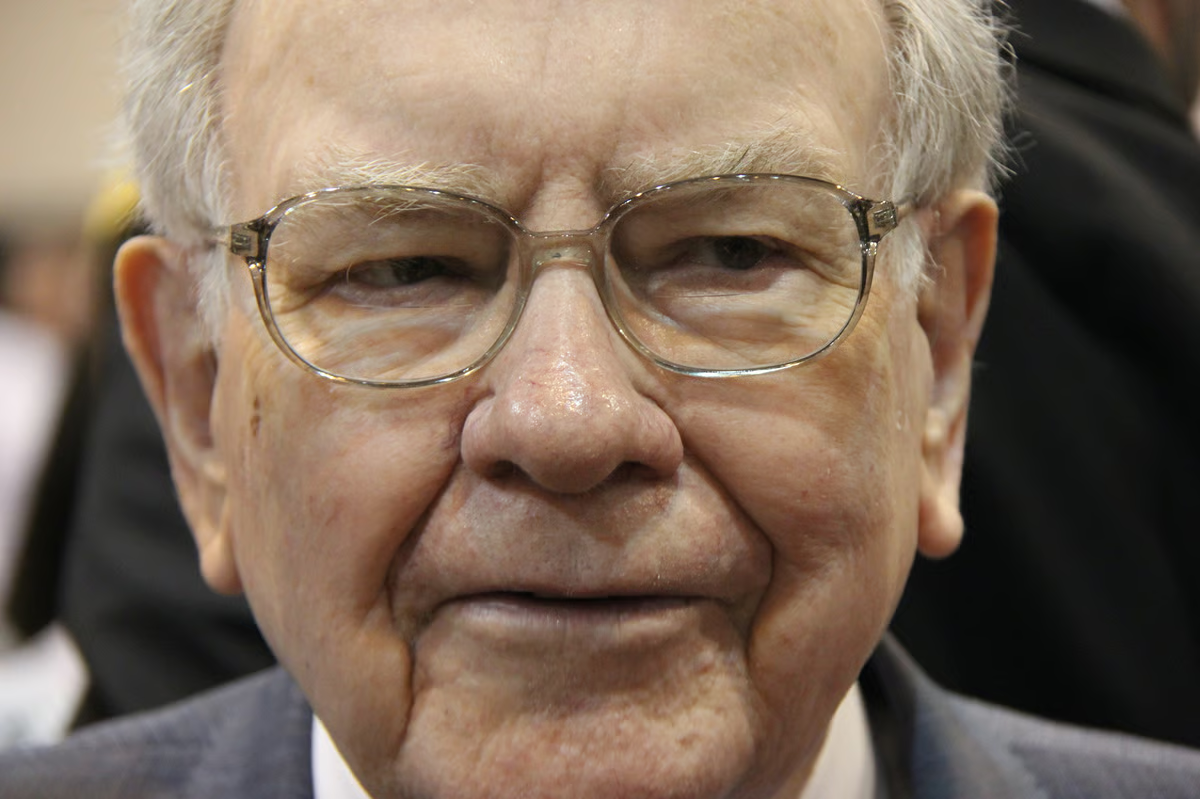
Berkshire Hathaway’s recent quarterly filing has unveiled a notable shift in strategy from Warren Buffett, marking an era of significant stock sales as he approached his retirement from the CEO role on December 31, 2025. This Form 13F filing, a standard report that details the equity holdings of institutional investment managers, reflects a pattern of net selling by Buffett and his team, a trend that has persisted for 13 consecutive quarters leading up to his departure.
In his final quarter, Buffett parted ways with substantial shares of major companies, including 7,724,000 shares of Amazon, 10,294,956 shares of Apple, and 50,774,078 shares of Bank of America. These decisions highlight a dramatic reduction in Berkshire’s stakes, with 77% of its Amazon holdings offloaded, a 75% decrease in Apple shares since September 30, 2023, and a 50% cut in Bank of America shares since mid-2024.
The timing of these sales coincides with a historically low corporate income tax rate, which may have influenced some of Buffett’s decisions, particularly regarding Apple and Bank of America. However, overarching valuation concerns appear to be the primary rationale behind these divestitures. When Buffett initially acquired shares in these companies, their respective price-to-earnings (P/E) ratios were significantly lower. For instance, Apple’s P/E was in the low-to-mid teens back in 2016, while it has since surged to 33. Bank of America, which Berkshire supported with a $5 billion investment in 2011 when shares were 62% below book value, now trades at a 37% premium.
Interestingly, while many positions were reduced or sold, Buffett made headlines with a striking purchase: 5,065,744 shares of The New York Times Co., valued at approximately $352 million. This acquisition is especially noteworthy given Buffett’s historical preference for well-established brands that have garnered consumer trust. The New York Times, with its strong brand, modest dividend, and ongoing share buybacks, aligns well with this investment philosophy. The company also reports a strong demand for digital subscriptions, which surged to approximately 12.78 million, supported by rising revenue per user and robust growth in digital advertising.
However, despite the encouraging performance metrics, questions linger regarding The New York Times’ valuation. Buffett acquired it at a forward P/E of 24, reflecting a more aggressive investment approach than his typical strategy of waiting for sound valuations. As the Oracle of Omaha transitions from his prominent role at Berkshire Hathaway, his recent activities signal a shift in both portfolio strategy and potential market outlooks, leaving many investors to ponder the implications of his final decisions at the helm of one of America’s most storied investment firms.