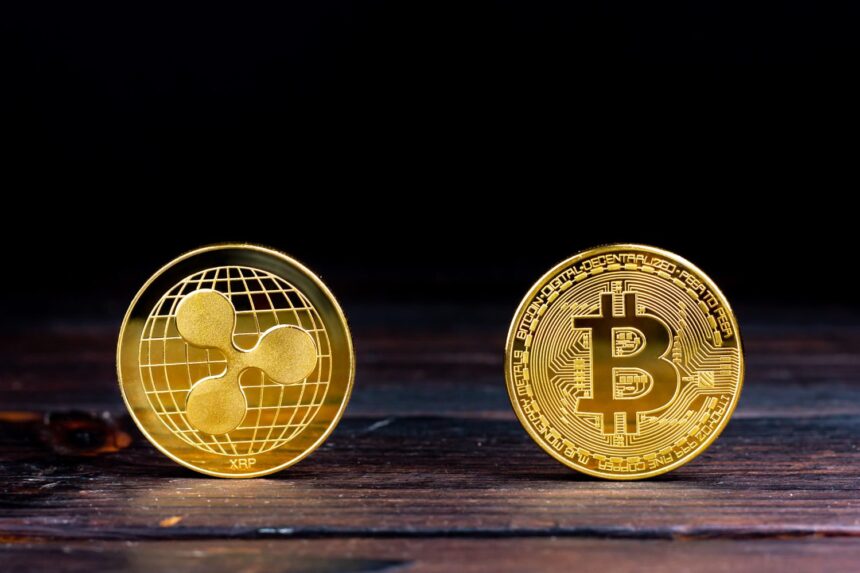
Investors grappling with the decision to invest $10,000 into either XRP or Bitcoin are presented with varied opinions from three different AI models—ChatGPT, Grok, and Claude—each analyzing potential outcomes for 2026.
Currently, XRP trades at approximately $1.50, down 60% from its cycle high of $3.65, while Bitcoin is priced around $68,000, sitting 45% below its peak of $126,000. Both cryptocurrencies have seen significant downturns from their highs, yet their paths to recovery appear distinct.
Investment Analysis
Investing $10,000 in XRP at the current rate would yield about 6,667 tokens. This potential investment hinges on the belief in a substantial bounce back for XRP, given its considerable decline. However, XRP is known to exhibit more volatility, often losing value quickly when market conditions deteriorate.
On the other hand, $10,000 invested in Bitcoin would purchase roughly 0.147 BTC, reflecting a smaller drawdown compared to XRP. Bitcoin’s historical performance indicates it tends to maintain its value better during market downturns, making it a more stable option. This investment is thought to provide resilience and liquidity, offering a buffer against market volatility.
AI Insights
ChatGPT’s Perspective
ChatGPT leans towards XRP, anticipating it could rebound to between $2.50 and $3.50, representing a 56% to 119% upside. This projection could elevate the initial investment to approximately $15,600 to $21,900. ChatGPT cites three main catalysts for its view: significant ETF inflows for XRP, a growing market cap for RLUSD, and Ripple’s institutional acquisitions, which could enhance demand in the long term. In contrast, Bitcoin’s projected price ranges from $85,000 to $120,000, to yield a more conservative 21% to 71% gain.
Grok’s Recommendation
Grok favors Bitcoin, citing its steadiness, with forecasts placing its price at $75,000 to $150,000 by late 2026, which could make the $10,000 investment worth between $11,000 and $22,000. Grok describes Bitcoin as a defensive cryptocurrency, emphasizing that it has a more substantial liquidity pool than XRP and that Bitcoin investors typically manage downturns more effectively, leading to less dramatic price swings.
Claude’s Neutral Stance
Claude adopts a neutral position, suggesting that the choice heavily depends on the investor’s risk tolerance. For more daring investors seeking higher returns, Claude indicates XRP might be the better option, with projected price ranges varying significantly based on market conditions. Conversely, for those prioritizing stability, Claude suggests Bitcoin, with a narrower forecast that reflects its tendency to attract more patient investors.
Common Themes Across Models
Despite their differing perspectives, all three AI models concur on several essential points:
-
Influence of ETF Flows: The models agree that institutional capital plays a crucial role in determining market dynamics, particularly noting XRP’s strong ETF inflows compared to Bitcoin’s inconsistent flows.
-
Macro Risks: Each model acknowledges the unpredictability tied to macroeconomic factors that could impact prices widely, including Federal Reserve policies and geopolitical risks.
-
High-Risk Nature: All agree that cryptocurrency investments carry significant risks, with the potential for dramatic losses.
Conclusion
Choosing between XRP and Bitcoin ultimately hinges on individual investment priorities: high upside versus stability. While XRP presents a potential for substantial returns, it requires a readiness for greater volatility. In contrast, Bitcoin offers a safer harbor but with less room for significant price increases. For those who remain uncertain, diversifying investments between the two may be a prudent approach, allowing exposure to both risks and rewards.
Investors are encouraged to observe market developments over the next quarters to better inform their decisions. Meanwhile, a new option, SoFi, has emerged, providing access to a variety of cryptocurrencies within a regulated financial framework, making it an attractive choice for those looking to balance their investment portfolios.