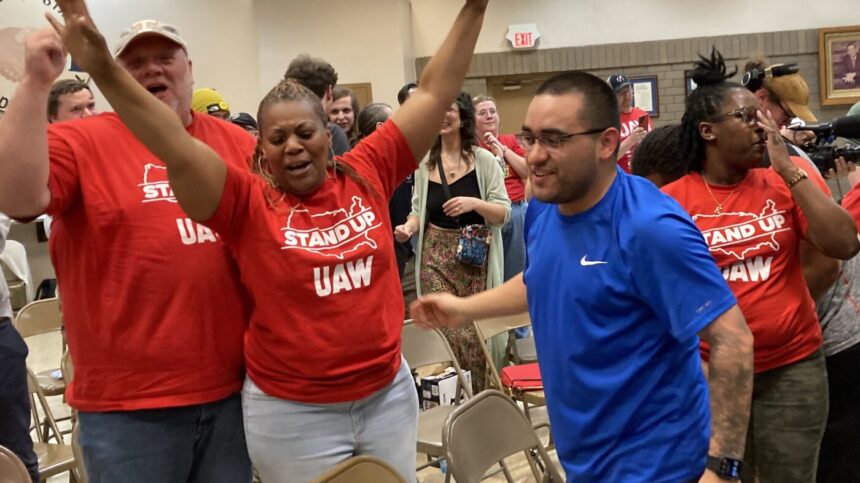
Volkswagen workers at the assembly plant in Chattanooga, Tennessee, have celebrated a significant milestone after ratifying their first union contract, marking a historic victory for the United Auto Workers (UAW) union in a region known for its resistance to unionization. The results, revealed on Thursday, showed an overwhelming 96% of participating workers approved the contract, which ushers in several key benefits including pay increases and job security.
The journey to this landmark agreement has been tumultuous. Initial attempts at unionization failed in past votes, with workers previously rejecting union affiliation. However, in early 2024, momentum shifted. After a lengthy negotiation process, which included a brief period where striking was on the table, the UAW and Volkswagen reached a tentative agreement earlier in February that would ultimately lead to the successful ratification.
UAW President Shawn Fain commended the workers for this achievement, stating, “Today you showed the world Southern autoworkers are ready to fight.” He extended an invitation to non-union workers in the South, suggesting they join the movement for their rights.
The newly approved contract promises immediate benefits, including a $6,550 bonus paid upon activation and a substantial wage increase totaling 20% over the contract’s duration, which will remain in effect until February 2030. This increase will elevate the hourly wage for production workers to a projected $39.41 and $49.86 for skilled positions, in addition to cost-of-living adjustments.
Healthcare benefits have also improved, with a 20% reduction in premiums guaranteed for the next four years, while workers will receive two additional days off each year and assurance of job security, compelling Volkswagen to engage with the union before implementing layoffs or plant closures.
Tony Bodewes, who has served at the VW battery plant for five years and participated in the bargaining committee, noted the previous impasse in negotiations was overcome when the company agreed to enhance job security clauses to safeguard against potential plant closures.
The implications of this victory extend beyond the immediate benefits to workers. As the UAW struggles to grow its presence in Southern states, where many auto manufacturers have established operations, this contract offers a new template for unionizing efforts in the region. The developments at Volkswagen stand out in contrast to the broader trend, as the labor landscape in the South has historically been challenging for unions.
The UAW has turned its attention to the South due to declining union representation among traditional automakers like Ford and GM, which have predominantly operated in Northern states. As recent foreign investments surge into Southern manufacturing, including commitments from companies like Hyundai, the UAW is aiming to capitalize on the newfound momentum this contract provides.
Despite the UAW’s success in Chattanooga, not all unionization efforts in the South have yielded positive results. Recently, workers at a Mercedes plant in Alabama rejected a union bid, highlighting the volatile nature of the labor environment in that state.
Political factors also influence union dynamics, as the recent shift in federal administration suggests challenges ahead for labor advocacy. With changing governance landscapes and heightened scrutiny on unions, experts express caution about the ability to replicate this success at other plants.
Moving forward, the UAW’s contract with Volkswagen may serve as a model and motivational tool for other workers in similar settings, fostering renewed interest in unionization as they navigate ongoing changes within the automotive landscape. While some workers express satisfaction with the new contract, hopes for additional paid time off and even higher wages reflect a persistent desire for further improvements in worker benefits.