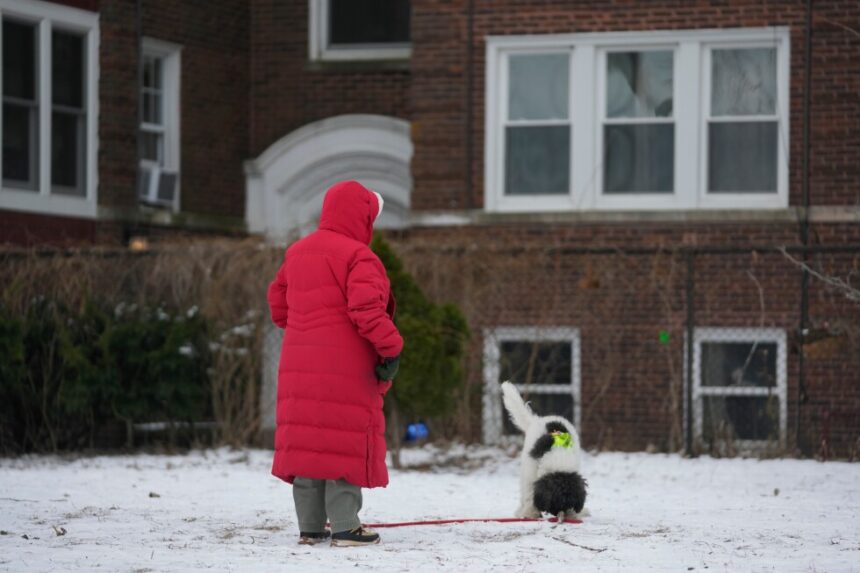
Millions across North America are experiencing an unusually harsh winter, marked by bitterly cold temperatures that some say bring back memories of a bygone era. Chris Ferro, a Brooklyn resident, shared his surprise at the extreme cold, stating, “Pipes that never froze on me for 15 years froze.” The past two months have seen temperatures plummet, causing disruption to his property renovation plans in Albany, yet he feels fortunate that his pipes remained intact.
Recent polling from The Associated Press-NORC Center for Public Affairs Research reveals that approximately 60% of U.S. adults report being affected by severe cold or winter storms in the past five years. This figure marks a notable rise since a survey conducted in February 2025, which indicated around half had similarly felt the effects of extreme cold. A series of harsh winter storms has contributed to this sentiment, leading to widespread power outages and disrupted daily life across various states.
Despite the extraordinary cold, experts emphasize that such weather events are growing rarer amid a changing climate, primarily driven by human activity. The first two decades of the 21st century have been characterized by historically warm temperatures, making this winter’s prolonged cold particularly jarring for many Americans, especially younger generations who have little frame of reference for such winter conditions.
An overwhelming 70% of adults report higher household utility bills due to the extreme cold, with nearly 40% having faced work or school cancellations as a result. The financial burden is echoed by Annie Braswell from North Carolina, who noted her utility bill had doubled this winter compared to normal rates. She contrasted her current experience to last summer’s sweltering heat, revealing the stark variability in weather.
The impact of the recent severe cold has also led to rising concerns over increasing electricity costs, with numerous individuals attributing stress to their escalating bills. Environmental activists like Bill McKibben believe that these rising costs will have significant political ramifications as citizens grapple with climate change’s tangible effects.
Geographically, the consequences of the cold weather have been felt unevenly, with about 60% of Midwesterners and half of Southerners reporting work or school disruptions. In contrast, only 15% of individuals in the West shared similar experiences.
The connection between extreme weather and climate change is swiftly becoming clearer. Roughly two-thirds of those who experienced severe weather in recent years, including heatwaves, droughts, and storms, attribute these events to climate change. This perception varies notably along partisan lines, with a stark divide; around 80% of Democrats perceive climate change as a contributing factor to extreme weather, compared to just 30% of conservative Republicans.
Experts attribute the increasing frequency of severe cold outbreaks to disturbances in the Arctic polar vortex, which can push cold air further south into North America. As temperatures rise and Arctic ice diminishes, these polar disruptions are occurring more frequently.
Overall, a significant majority of Americans—about 80%—report having encountered severe weather conditions over the past five years. While they are more likely to observe extreme heat, the stark realities of winter cold have left many grappling with unexpected challenges and reinforcing the urgency for addressing the broader implications of climate change.