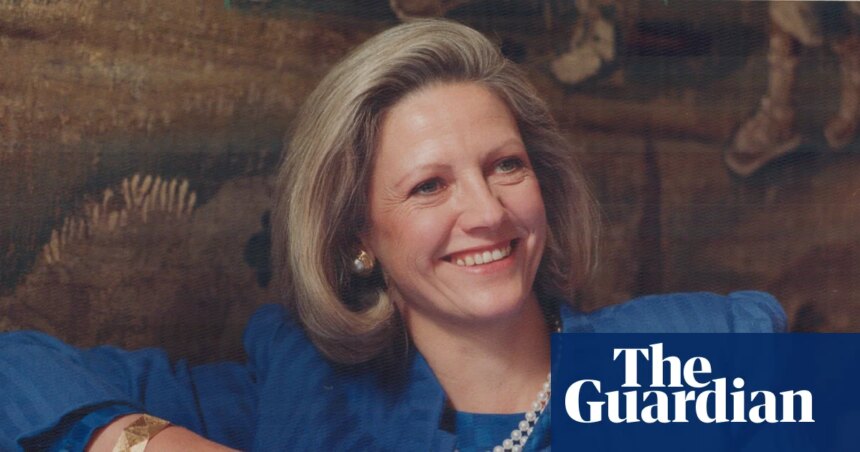
The passing of Anna Murdoch-Mann, the ex-wife of Australian media magnate Rupert Murdoch, has brought a poignant close to a life marked by significant contributions to the media landscape and personal trials intertwined with immense public scrutiny. Murdoch-Mann died at her home in Palm Beach, Florida, prompting reflections on her profound impact during a tumultuous era in media history.
Born in Glasgow, Scotland, as Anna Torv, Murdoch-Mann emigrated with her family to Australia in 1944. She rose to prominence as a reporter at the Sydney Daily Mirror and later the Sydney Daily Telegraph, where she first encountered Rupert Murdoch. Their relationship blossomed into a marriage that lasted 31 years, significantly influencing the expansion of Murdoch’s media empire, News Corp.
Their union produced three children—Elisabeth, James, and Lachlan—who now occupies vital positions within the family business. However, their marriage suffered a public fallout when Murdoch’s affair with Wendi Deng led to their separation in 1998. Following their divorce in 1999, which resulted in a substantial settlement reportedly worth $1.7 billion, Murdoch married Deng shortly thereafter.
Murdoch-Mann’s legacy is underscored by her strategic role in shaping News Corp during its peak growth phases in the 1980s and 1990s. As biographers have noted, her potential as a successor to Rupert was a topic of serious discussion, highlighting her foundational role in the company. Observers suggest that her presence within the family and the company created a dynamic that influenced the future of News Corp, particularly in light of the ongoing battles for succession among her children.
In a candid interview in 2001, Murdoch-Mann expressed her dismay over the collapse of her marriage and the pressure her children would face in competing for their father’s approval. This concern foreshadowed the complex familial dynamics that have unfolded in recent years, particularly regarding control of the media empire. After Murdoch’s passing, Lachlan Murdoch is set to secure control, leaving his siblings with substantial financial compensation but raising questions about the future of leadership within the company.
Her influence extended beyond the family. Despite personal hardships, Murdoch-Mann maintained a commitment to philanthropy, holding leadership roles in various organizations, including Children’s Hospital Los Angeles and Haiti’s Hospital Albert Schweitzer. The Vatican recognized her efforts when she was made a Dame of the Order of St Gregory the Great by Pope John Paul II.
Throughout her life, Murdoch-Mann remained an enigma—balancing her public persona with private struggles. Following her exit from the news board, she focused on her writing, publishing three novels that echoed her experiences within a family-run media empire. Her life, especially her status during the peak of News Corp, served as a testament to resilience amid personal and corporate upheaval.
Murdoch-Mann’s profound legacy is further complicated by her relationship with faith and family, marking her as a central figure in a family whose trajectory has fascinated the public. As friends recall her early life, they reflect on her drive and ambition, highlighted by her remarkable rise within a male-dominated industry. Her journey resonates with themes of struggle, empowerment, and the deeply intertwined nature of family and business within the Murdoch dynasty.
Anna Murdoch-Mann’s passing reminds us of the intricate tapestry of personal and public narratives that have shaped one of the most powerful media families in modern history. Her life serves as both a foundation and a cautionary tale about the intersection of love, ambition, and the relentless pursuit of success in a world governed by powerful perceptions and the weight of legacy.