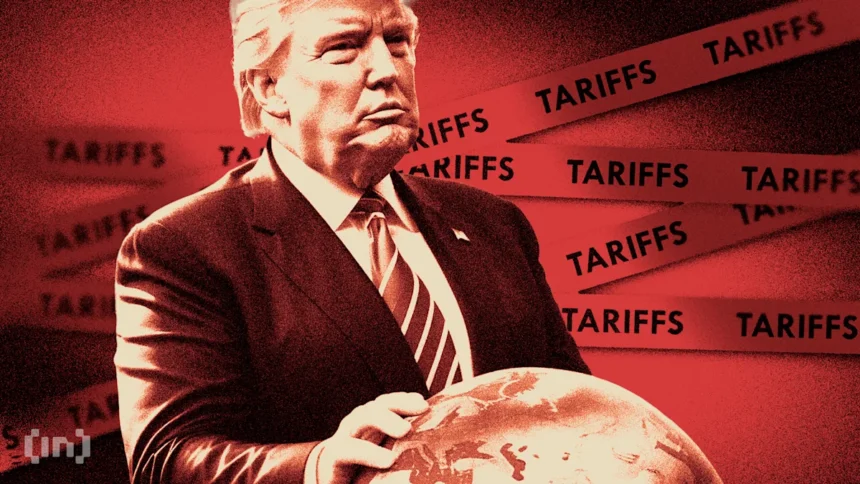
US financial markets and cryptocurrencies experienced a notable upward shift following a landmark decision by the Supreme Court that invalidated former President Donald Trump’s extensive global tariffs. The court found that Trump had overstepped his authority by implementing broad tariffs under emergency powers without obtaining congressional approval. This ruling reinstates Congress as the key decision-maker in matters of trade policy, significantly curtailing the president’s ability to unilaterally dictate tariffs.
This judicial decision alters the dynamics of economic governance in the U.S., bringing clarity to a landscape previously fraught with uncertainty. The tariffs, which had been enacted under emergency provisions, targeted a wide array of imports from various countries and had generated substantial revenue. However, businesses and trade organizations had contested these tariffs, arguing that they increased operational costs and created disruptions in supply chains. The Supreme Court’s ruling effectively bars the imposition of similar tariffs unless expressly sanctioned by Congress.
The financial markets responded positively to the announcement. The S&P 500 witnessed a rise of approximately 0.40%, while the Nasdaq advanced by roughly 0.70%. These gains reflected a resurgence of investor confidence, particularly in technology stocks, which benefitted from improved projections for economic growth and stability.
In tandem with stock market improvements, the global cryptocurrency market cap surged to around $2.38 trillion, with Bitcoin nearing a trading price of $67,000 following a period of volatility. Gold, on the other hand, initially dipped in response to the ruling but later recovered, underscoring a shift in risk sentiment among investors.
The immediate market reactions signify a significant change, with decreasing trade uncertainty playing a crucial role. Tariffs can act as a form of taxation on imports, leading to increased prices and a potential slowdown in economic activity. The elimination of the looming threat of extensive tariffs alleviates inflation concerns and enhances liquidity expectations, both favorable developments for risk assets.
The cryptocurrency market is particularly sensitive to shifts in global liquidity and investor sentiment. As macroeconomic uncertainty diminishes, there is often an influx of capital into more speculative investments like cryptocurrencies. The concurrent recovery in both crypto assets and stock markets is an indication that investor confidence is rebounding in the wake of recent geopolitical tensions and economic anxieties.
However, this ruling also illuminates deeper political divisions within the country. By curtailing presidential authority, the decision reinforces Congress’s constitutional role in controlling tariff policy. While this may delay future trade initiatives, it also diminishes the likelihood of sudden policy changes that can create market instability.