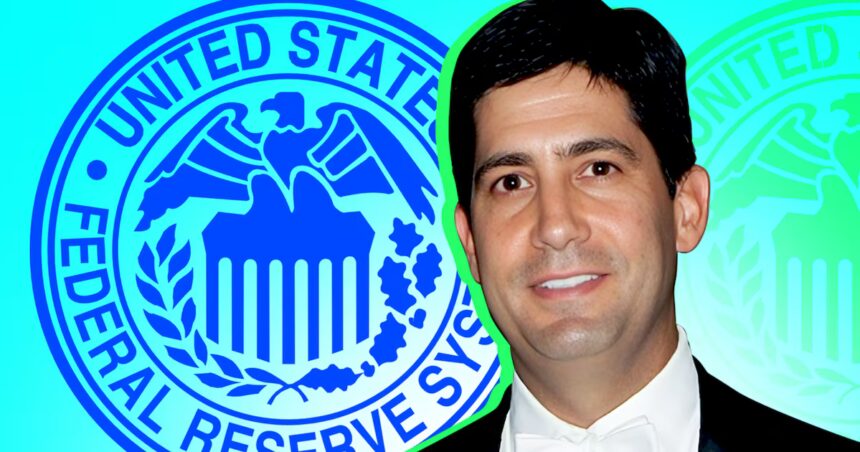
Bitcoin’s value has significantly decreased, currently sitting nearly 50% below its peak in October. Investors are closely monitoring the potential implications of Federal Reserve Chair nominee Kevin Warsh’s possible appointment in June. Despite his past favorable remarks about Bitcoin and advocacy for lower interest rates, current market sentiment has categorized Warsh as a hawkish figure—suggesting that he may implement strict interest rates to combat inflation.
Warsh’s approach to managing the Fed’s extensive balance sheet raises concerns among investors. Following the Great Recession, the Federal Reserve engaged in extensive quantitative easing, purchasing trillions of dollars in U.S. Treasury bills. This influx of capital has been credited with stimulating the economy, but it has also created a dependency on central bank liquidity, a point Warsh has acknowledged. Following his nomination, Bitcoin saw a decline, highlighting investor anxiety regarding potential tightening measures that could adversely affect the cryptocurrency.
Dilin Wu, a research analyst at forex broker Pepperstone, warned that Warsh’s appointment could lead to increased volatility in crypto markets. Wu emphasized that aggressive tightening might reduce bank reserves at a time when technology companies are intensifying investments in infrastructure and artificial intelligence, which could lead to significant market imbalances.
Despite Warsh’s alignment with former President Trump, who has advocated for lower interest rates, observers suggest Warsh is a pragmatist and may avoid rapid cuts for fear of overheating the economy. This nuanced perspective helps explain Bitcoin’s recent price drop following Warsh’s nomination. According to Jimmy Xue, co-founder and COO of Axis, the 14% decrease in Bitcoin’s value reflects market apprehension that Warsh’s conservative monetary philosophy might overshadow his previously crypto-friendly stance in the short term.
Experts believe that, longer term, Warsh’s pro-crypto stance may fortify Bitcoin’s position. In 2018, he characterized Bitcoin as a potential sustainable store of value akin to gold, which bodes well for future market sentiment.
Additionally, various factors are influencing Bitcoin’s fluctuating price. David Lawant, head of research at Anchorage Digital, pointed out a “narrative divergence.” Previously, Bitcoin traded in alignment with gold as a safeguard against currency debasement, but it has since begun tracking more closely with non-AI tech assets, a sector that has been under pressure recently.
Despite the current turbulence, there’s hope that Bitcoin might stabilize in the near future due to the influence of institutional investors. Currently, Bitcoin is holding steady, trading at $68,143, while Ethereum has seen a slight increase of 1%, priced at $1,979. The ongoing developments in the market suggest that investors will need to remain vigilant as they navigate the uncertain landscape shaped by potential changes in monetary policy.