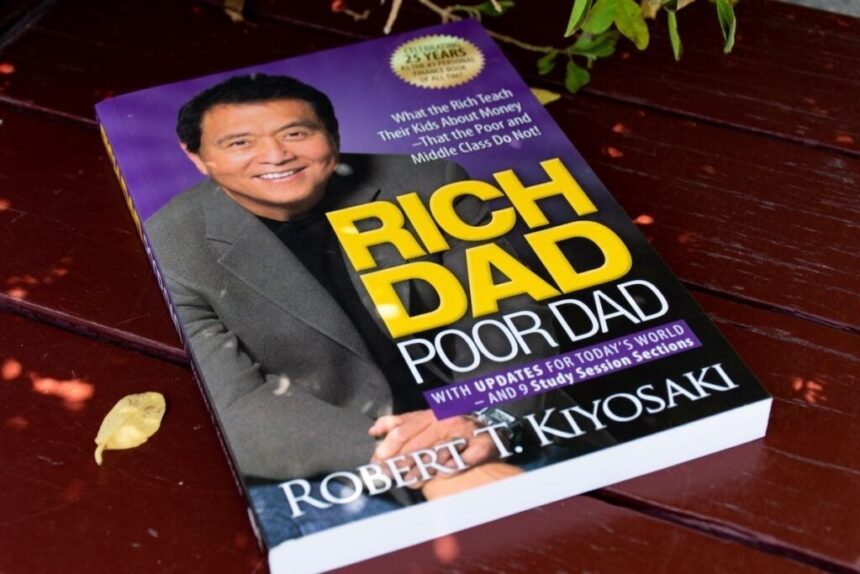
On Saturday, Robert Kiyosaki announced his recent purchase of a full Bitcoin for $67,000, describing the cryptocurrency as being in a state of “crashing.” He positions this acquisition as a strategic move against a potential decline of the U.S. dollar, emphasizing that he views Bitcoin as a safeguard amid increasing U.S. debt concerns. Kiyosaki’s investment philosophy largely revolves around accumulating assets like Bitcoin, Ethereum, and physical commodities, all while disregarding short-term market fluctuations.
In an update shared on X, Kiyosaki pinpointed two critical reasons for his latest Bitcoin acquisition. Firstly, he believes that a crisis in the dollar could lead to extensive money creation, which he critiques by labeling the Federal Reserve as “The Marxist Fed.” This commentary aligns with his view that any future expansion of the monetary supply amounts to what he terms “fake dollars.” Secondly, Kiyosaki expressed excitement over the impending milestone of the “21 millionth Bitcoin” being mined, indicating a belief that scarcity will drive demand.
Kiyosaki’s investment strategy extends beyond Bitcoin; he has also confirmed ongoing purchases of Ethereum while remaining unaffected by the day-to-day price movements of either asset. His distrust of traditional financial institutions, including the Federal Reserve and the U.S. Treasury, informs his approach. He perceives these entities as failing to grasp the essence of money and its economic implications.
In addition to cryptocurrencies, Kiyosaki underscores the importance of tangible assets such as gold and silver, arguing their historical significance as valid forms of money. He likens Bitcoin to a digital equivalent of these precious metals, framing both as essential components of a diversified investment strategy.
His ongoing investments reflect a wider trend among investors seeking alternatives to conventional assets. Last year, Kiyosaki projected that Bitcoin could soar to $250,000 by 2026, setting ambitious target prices for gold at $27,000 and silver at $100. This bullish outlook is rooted in his belief in the enduring value of these assets amid prevailing economic instability.
Kiyosaki’s critique of institutions like the Federal Reserve stems from his argument that their monetary policies diminish genuine wealth by proliferating “fake dollars.” His strategy of acquiring assets during market downturns not only underscores his confidence in their long-term value but also serves as a cautionary tale for investors navigating market volatility.
In previous statements, he has claimed that Bitcoin could eventually reach $1 million over the next several years to a decade, linking this optimistic forecast to the rising U.S. national debt and the diminishing purchasing power of the dollar. He believes that once Bitcoin’s supply reaches its capped limit of 21 million coins, it will surpass gold in relevance, further solidifying its role as a hedge against economic uncertainty.
Kiyosaki’s investment portfolio showcases a blend of scarce digital assets like Bitcoin and Ethereum alongside traditional stores of value like gold and silver. This assemblage is driven by a singular macroeconomic concern: the instability tied to U.S. debt and the institutions managing the currency.