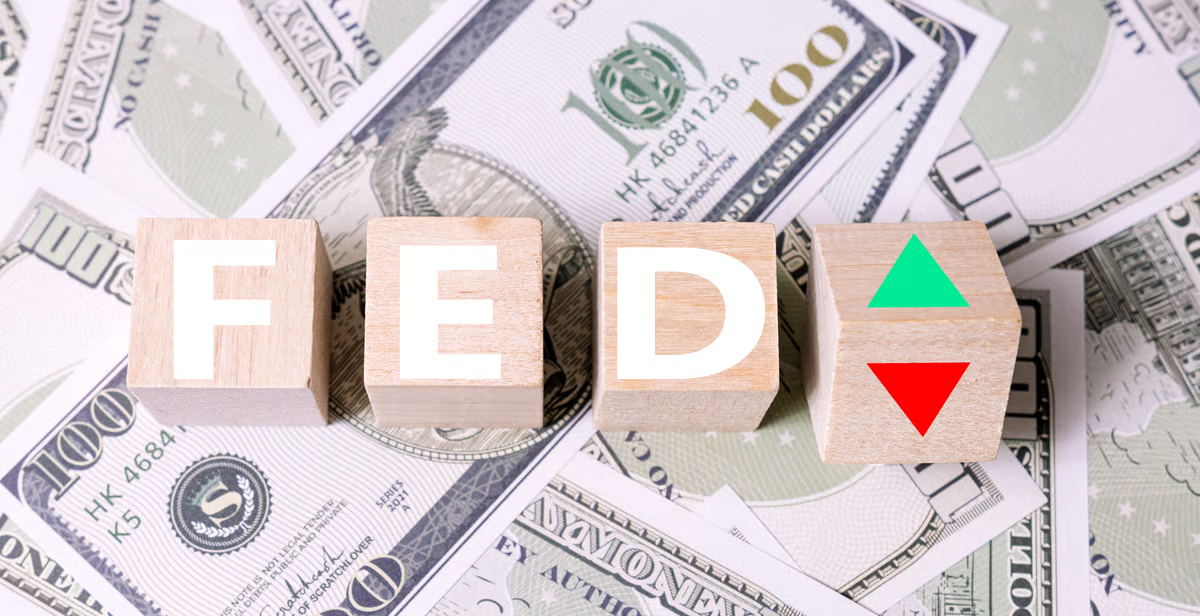
Financial markets are abuzz with growing expectations that the Federal Reserve may implement three or more interest rate cuts in 2026. Over recent months, futures markets had predominantly anticipated just two quarter-percentage-point reductions in 2026; however, new economic indicators are shifting these forecasts.
Rate cuts hold significant importance for both investors and the broader financial landscape. They typically stimulate stock market growth by easing borrowing costs. Such adjustments can lead companies to lower interest expenses, borrow for expansion, and ultimately encourage consumer spending, as financing becomes more favorable.
Despite increased pressure from the White House for substantial cuts, Federal Reserve Chair Jerome Powell has remained committed to a data-driven approach regarding monetary policy, closely monitoring job statistics and inflation. This commitment was made evident in January, when the Fed opted not to alter the target interest rate, much to President Donald Trump’s chagrin.
Recent economic data, however, is painting a more favorable picture. Inflation rates have begun to decline more rapidly than previously anticipated. In January, consumer prices saw an annual increase of 2.4%, falling below economists’ expectations of 2.5%. When excluding volatile categories such as food and energy, the Consumer Price Index recorded a rise of 2.5%, marking the lowest level since April 2021. This trend, if it persists, may provide the Fed leeway to consider additional rate cuts beyond the two initially forecasted.
Several Federal Reserve officials, usually cautious about making predictions, have hinted at the possibility of further cuts. Austan Goolsbee, President of the Federal Reserve Bank of Chicago, recently stated that if the current path toward the 2% inflation target continues, “I still think there’s several more rate cuts that can happen in 2026.”
Furthermore, tariff-driven price increases remain relatively modest and limited to specific goods categories, suggesting that inflationary pressures may be easing. As Powell’s term as Fed chair is set to conclude in mid-May, speculation has arisen about the potential appointment of Kevin Warsh, Trump’s nominee for the position. Warsh’s monetary policy intentions appear complex; he advocates for both interest rate reductions and the contraction of the Fed’s substantial balance sheet.
Current data from the Fed Funds Futures Market indicates that the likelihood of three or more rate cuts in 2026 has increased to 43%, a jump from 25.6% just a month prior. This shift indicates a rising optimism about the Fed’s potential pivot toward more aggressive rate cuts this year, which could provide a significant boost to the stock market landscape in the near future. Investors are keenly watching these developments as they unfold.