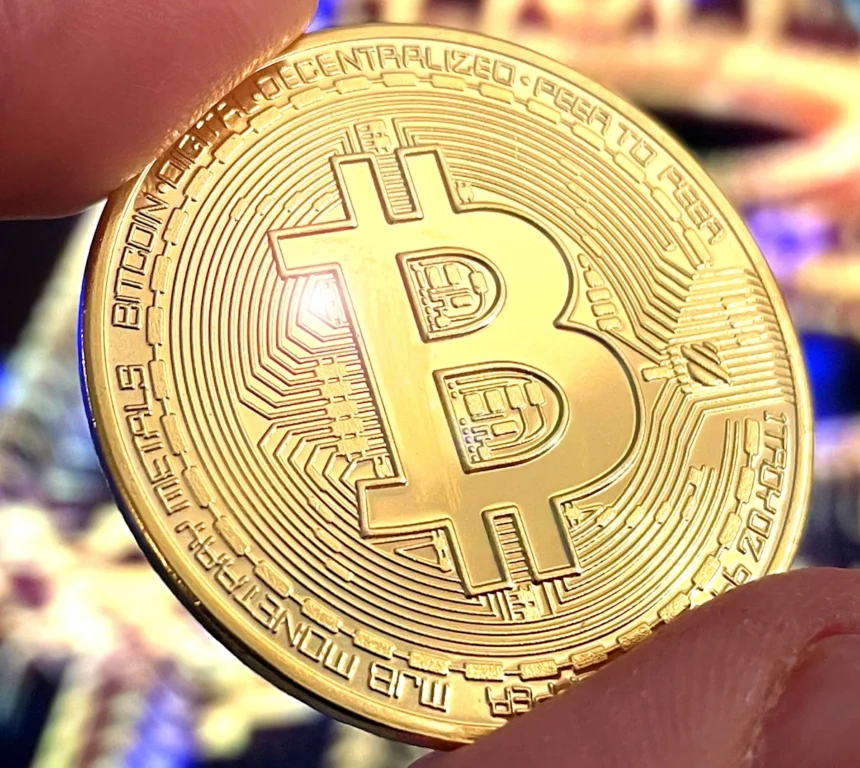
Bitcoin, the world’s largest cryptocurrency, finds itself entrenched in one of its most significant struggles yet, having experienced a dramatic decline of over 40% from its peak. This downturn has left observers questioning its relevance in a market where traditional drivers of recovery have been largely ineffective. As institutional adoption deepens and regulatory landscapes grow friendlier, the forces that typically support a cryptocurrency’s resurgence are now seemingly working against Bitcoin.
Interestingly, the current predicament is not a result of systemic failure. The environment has never been more accommodating for cryptocurrencies, with major financial institutions increasingly embracing Bitcoin. However, despite these supportive conditions, Bitcoin’s value has plummeted, leaving an essential question in its wake: if it cannot effectively serve as a hedge, a payment method, or a speculative vehicle, what is its true purpose?
“This selloff is a clear indication that the era of Bitcoin defined by price appreciation is shifting to one where its utility is being scrutinized,” noted Owen Lamont, a portfolio manager. The prevailing narrative of “number go up” has transformed into a far less inspiring tale of “number go down.”
One of the most pressing issues Bitcoin faces is its narrative problem. Unlike stocks or commodities that have intrinsic fundamentals underlying their valuations, Bitcoin relies solely on belief. With many retail investors now sitting at substantial losses after the speculative highs fueled by previous market conditions, the alluring stories that once attracted new buyers are dwindling. New speculative platforms, such as prediction markets, are pulling investor attention away, making Bitcoin seem less appealing in comparison.
A significant pivot occurred in November when Jack Dorsey, a prominent advocate for Bitcoin, announced that his Cash App would begin supporting stablecoins. This shift indicated a notable change in priorities within the payments sector. Regulatory developments have given stablecoins a central position in the digital economy, as the bipartisan Genius Act progressed and stablecoin infrastructure gained traction. As innovations such as tokenization and cross-chain payments gain momentum, Bitcoin is no longer the sole focus of the cryptocurrency landscape.
Moreover, as Bitcoin’s allure diminishes, the financialization of the asset has diminished its once-mystical status. Initially perceived as a means of escaping the confines of traditional finance, Bitcoin now resembles a standard Wall Street instrument, complete with derivatives and automated trading mechanisms. While its engineered scarcity remains a talking point, Bitcoin must compete with a vast array of other investment opportunities that capture investor attention far more effectively.
From a macroeconomic perspective, Bitcoin has recently failed a crucial test as volatility gripped markets. While assets like gold and silver have seen upticks amidst geopolitical tensions and a weakening dollar, Bitcoin’s value has succumbed to downward pressure. Data shows substantial outflows from Bitcoin-focused ETFs, confirming a trend where investors are increasingly viewing Bitcoin not as a hedge but merely as a speculative asset.
Additionally, the model of digital asset treasuries, which afforded companies an avenue to bolster their market valuations by amassing Bitcoin, is also facing challenges. As Bitcoin’s value has dwindled, these treasury positions have come under scrutiny, leading to diminished credibility and declines in corporate valances.
Bitcoin’s dominant speculative culture is also under threat, with new avenues capturing the interest of traders. Platforms like Polymarket and Kalshi have surged in popularity, catering to a demographic that is still eager for speculative engagement but now within a different context. This may signal a shift in interest from the cryptocurrency markets toward these more straightforward platforms.
The mechanics of Bitcoin trading presents another layer of complexity. Spot ETFs have simplified access for investors, yet Bitcoin’s pricing remains significantly affected by offshore derivatives markets characterized by high leverage. These conditions contributed to swift liquidations during market downturns, causing abrupt losses for investors.
Despite these challenges, Bitcoin is far from extinct. It continues to hold the position as the most liquid digital asset available, backed by expansive exchange presence and a solidified role in various financial portfolios. Many are banking on the hope that the same regulatory clarity enabling stablecoins can also rejuvenate the broader cryptocurrency ecosystem.
Nonetheless, the greatest threat to Bitcoin’s sustained relevance lies in potential drift—a slow siphoning of attention, capital, and confidence. As foundational narratives begin to fray—be it as digital gold, a medium of exchange, or an institutional asset—the critical question remains whether Bitcoin’s enduring appeal can withstand this storm or if it represents the onset of a longer-term crisis in the digital economy.