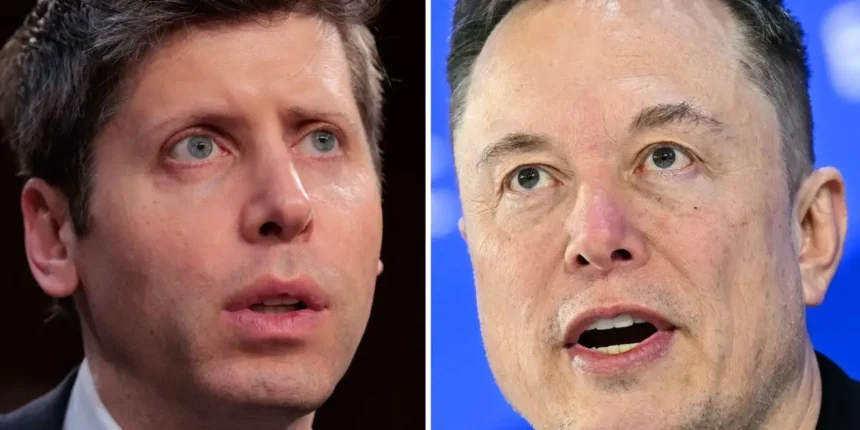
In a striking divergence that highlights the contrasting visions for the future of technology, SpaceX CEO Elon Musk and OpenAI CEO Sam Altman have openly clashed over the feasibility of building data centers in space. Musk is a staunch advocate for the idea, positioning it as a new frontier for data management, while Altman has dubbed it an impractical dream at present.
During a live interview in New Delhi, Altman articulated his skepticism regarding the concept, asserting, “I honestly think the idea with the current landscape of putting data centers in space is ridiculous.” His comments elicited laughter from the audience, underscoring a broad consensus on the challenges associated with such an ambitious project. Altman acknowledged that while orbital data centers could indeed be viable in the future, significant challenges remain, including prohibitive launch costs and the inherent difficulties in repairing such technology in the harsh environment of space.
“We are not there yet,” Altman continued, emphasizing that while space has multiple unexplored potentialities, the establishment of orbital data centers will not impact the industry at scale within the current decade.
In sharp contrast, Musk continues to champion the prospect of constructing these data centers among the stars. Highlights of Musk’s vision emerged during an all-hands meeting at xAI, where he discussed SpaceX’s aspirations to develop a “constellation of a million satellites that operate as orbital data centers.” In pursuit of this goal, SpaceX has reportedly begun recruiting engineers to bring this ambitious project to fruition.
Musk has also noted that the recent acquisition of xAI by SpaceX would expedite the deployment of these orbital data centers. This move showcases Musk’s commitment to innovative thinking about infrastructure in space, even as Altman remains doubtful.
Despite Altman’s hesitations, the race to explore data centers beyond Earth isn’t limited to Musk’s endeavors. Tech giant Google has also entered the fray with its Project Suncatcher, which was unveiled in November 2025. Google CEO Sundar Pichai suggested that the company could begin establishing solar-powered data centers in space as early as 2027, illustrating that Musk and Altman’s clashing views are part of a broader dialogue in the tech community.
The demand for data centers has surged as tech and AI companies rely heavily on them to fuel their operations, particularly for applications like large language models and chatbots. However, conventional terrestrial data centers bring environmental concerns — straining water resources, taxing power grids, and generating pollution. A recent Business Insider report highlighted a significant expansion in data center construction, revealing over 1,200 approvals across the U.S. by the end of 2024, a dramatic increase from figures a decade prior.
Amid these developments, several communities across Texas, Oklahoma, and other regions have begun to push back against proposed data center projects, reflecting growing apprehensions about their environmental impact and social ramifications.
The debate over data centers in space versus on Earth emphasizes not only the technological ambitions of leaders like Musk and Altman but also the intricate interplay between innovation and sustainability in an evolving digital landscape.