Ripple has substantially evolved beyond its origins as a payments-focused company. In 2025, the firm undertook a bold investment strategy, acquiring several companies for a combined total of approximately $4 billion. These acquisitions have enabled Ripple to create a comprehensive banking infrastructure, leading analysts to refer to the company as “the banker’s bank.”
According to NCashOfficial, traditional banks are hindered by the complexities of building blockchain infrastructure from the ground up, a challenge Ripple has spent over a decade tackling. Now, the company is offering its mature solutions directly to these banks.
The acquisition spree kicked off with the purchase of Hidden Road for $1.25 billion, which is a prime brokerage handling approximately $3 trillion annually. This entity was rebranded as Ripple Prime. Following this acquisition, Ripple secured Rail for $200 million, enhancing its capabilities with stablecoin payment rails. The next strategic move was the acquisition of GTreasury for $1 billion, breaking into the corporate treasury market. Finally, Palisade was brought into the fold, contributing institutional custody and wallet technology.
A significant milestone in this journey occurred in December 2025 when the Office of the Comptroller of the Currency (OCC) granted Ripple conditional approval for a national trust bank charter. This approval grants Ripple direct access to U.S. banking infrastructure, a defining moment for the company’s ambitions.
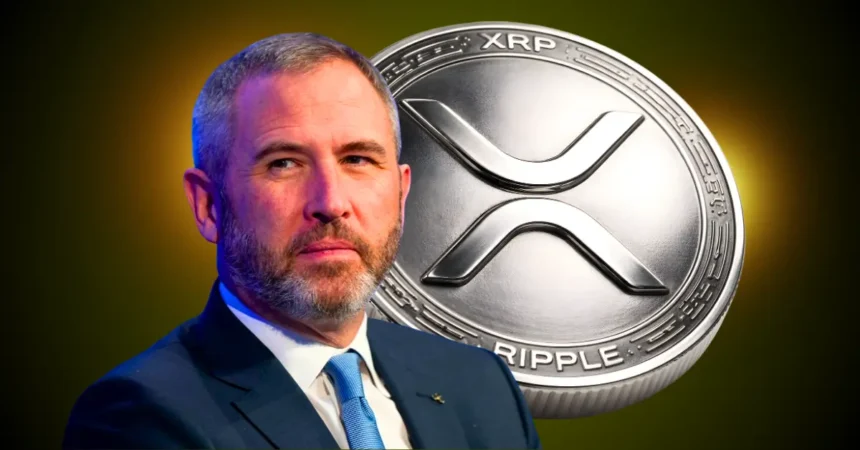
Ripple’s CEO, Brad Garlinghouse, has been careful in his messaging, emphasizing that banks are not just partners but customers. He underscored the company’s intent to work closely with banks to maximize the impact of their innovative technologies across the financial landscape, stating, “If we want these technologies to have the biggest impact on the largest number of people, banks are the touch point.” When pressed about the possibility of Ripple acquiring a bank, Garlinghouse succinctly replied: “They’re our customers.”
In the broader industry context, Cheeky Crypto pointed out that the SEC faces a deadline on February 26 regarding T. Rowe Price’s active crypto ETF, which includes XRP as a core asset. T. Rowe Price, managing $1.8 trillion in assets, has expressed confidence in the role that blockchain technology and digital assets will play in the future of financial services.
Currently, U.S. spot XRP ETFs have amassed over $1 billion in net asset value, representing more than 1% of the total circulating supply of XRP, which is trading at around $1.44, with a market cap of approximately $87 billion. Since January, 42 new wallets holding over a million XRP each have emerged on the blockchain.
Looking forward into 2026, Ripple plans to introduce native lending and incorporate zero-knowledge proofs on its XRP Ledger. However, experts caution that while enterprise adoption of Ripple’s infrastructure is imminent, it may not immediately drive a proportional demand for the XRP token, potentially leading to delays in price discovery.
As the company moves towards integrating more robust banking solutions, the ripple effect of these developments could redefine the landscape of cryptocurrency and traditional finance.