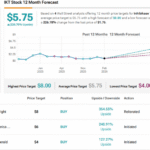
As global interest in distributed ledger technology continues to grow, the future of Hedera Hashgraph’s HBAR token is under intense scrutiny from market analysts and institutional investors. With increasing adoption among enterprises and a unique technological framework, HBAR could potentially see significant price appreciation by 2030, particularly in the context of targeting the psychologically important $0.5 mark.
Hedera Hashgraph sets itself apart with its innovative consensus algorithm, which facilitates high throughput and low latency transactions. The platform successfully processed over 20 billion transactions in 2024, a testament to its real-world application across various sectors. The Hedera Governing Council, which includes renowned organizations like Google, IBM, and Boeing, lends institutional credibility to the platform, ensuring that while decentralized, the governing body adheres to high reliability standards.
Data indicates that HBAR consistently ranks within the top 40 cryptocurrencies by market capitalization. Notably, trading volumes have surged since 2023, particularly following regulatory clarifications in several key jurisdictions. Furthermore, the network’s carbon-negative status has drawn the attention of environmentally-focused investors and corporations, making Hedera an attractive option for sustainable blockchain solutions.
Technologically, Hedera’s hashgraph consensus mechanism surpasses traditional blockchains in several significant ways. Its ability to achieve finality in just seconds and maintain low, predictable transaction costs at approximately $0.0001 is particularly beneficial for enterprises that require budget stability. Additionally, the network’s stablecoin platform, which has processed over $10 billion in transactions since launch, signals robust demand and utility in the financial sector.
A historical perspective reveals that HBAR’s price has followed distinct cycles aligning with broader market trends and key development milestones. Since its launch in September 2019 at around $0.12, the token reached an all-time high of $0.57 in September 2021 during a bullish market phase. However, subsequent bearish trends prompted significant corrections, posing challenges to the network’s resilience. More recent data indicates a leveling out in price fluctuations, suggesting a shift toward greater stabilization and maturity.
Looking ahead to 2026, forecasters highlight the year as a pivotal juncture for HBAR, coinciding with significant network upgrades and extended partnerships. Planned advancements such as sharding could boost network capacity significantly, addressing scalability issues faced by competing platforms. Analysts project various pricing scenarios for 2026 based on multiple adoption pathways, ranging from a conservative estimate of $0.18-$0.25 to an optimistic envisioning of $0.45-$0.55, contingent on market recovery and enterprise adoption.
The subsequent years of 2027-2028 are anticipated to mark Hedera’s transition toward mainstream application, aided by pilot programs from several financial institutions. Incremental token releases and clear regulatory frameworks are expected to influence market dynamics considerably, while institutional involvement is projected to grow.
Currently, metrics revealing institutional engagement portray a healthy upward trend, with a 40% year-over-year increase in enterprise nodes by 2024 and over $500 million locked in decentralized applications. These figures underline tangible network utility, extending beyond mere speculative activity into various sectors, including digital identity management, supply chain tracking, and carbon credit trading.
By 2030, projections indicate that Hedera could capture a substantial share of the global transaction processing market, thanks to advancements such as quantum-resistant cryptography. Market share analysis posits that distributed ledger technologies could account for a significant portion of annual transactions, with Hedera positioned favorably within specific enterprise applications.
However, to reach the crucial $0.5 price milestone, Hedera must navigate several critical factors, encompassing technological execution, enterprise adoption, and regulatory clarity. Consistent innovation is essential to maintain stability against emerging competition, alongside ensuring liquidity for institutional investors.
In summary, HBAR’s future price trajectory relies on the successful implementation of network upgrades and enterprise adoption, alongside a favorable macroeconomic environment. While the potential for price fluctuations remains, the intrinsic value of Hedera’s high-throughput, low-cost technology is becoming increasingly relevant in the context of a digitizing global economy. Investors would do well to observe transaction volume growth and governance dynamics as indicators of HBAR’s long-term prospects against both cryptocurrency alternatives and traditional financial systems.