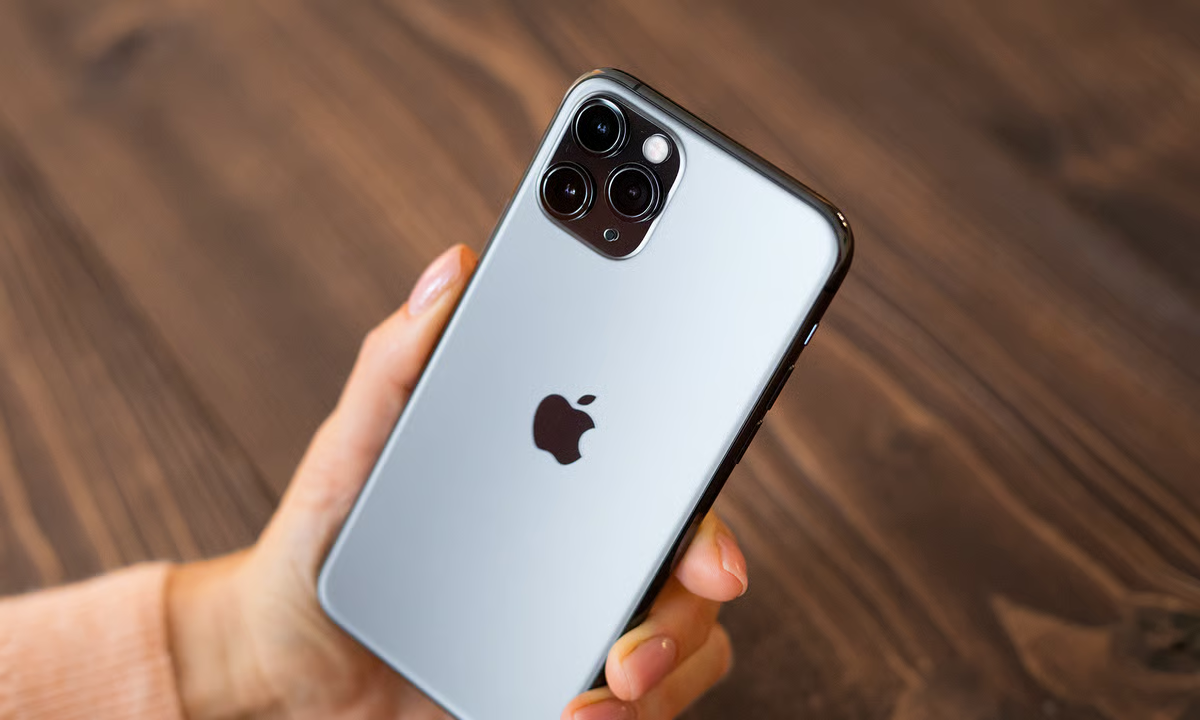
Apple has recently soared to become the world’s top-selling smartphone brand, solidifying its place in the global market. While the iPhone has consistently led in revenue and operating profits for years, it has now captured 46% of global smartphone revenue in 2024, despite accounting for only 28% of unit sales. This impressive feat is largely attributed to its high average selling price (ASP) of $903, marking the highest ever in the industry.
In 2025, Apple further cemented its dominance with the iPhone, particularly the new iPhone 17 model, which played a crucial role in this ascension. According to a report by Counterpoint Research, Apple reached 20% market share, outpacing its competitors while also enhancing its presence in emerging and mid-sized markets with a stronger product mix.
Apple’s growth isn’t limited to just the smartphone sector; the company boasts significant market leadership across its diverse product range. In the realm of audio devices, AirPods have become a runaway success. Launched less than a decade ago, they now hold approximately 21% of the true wireless stereo (TWS) market by 2025, surpassing the combined share of its next three competitors. The recent release of the AirPods Pro 3, featuring improved noise cancellation and battery life, is expected to further entrench Apple’s position among audiophiles.
The Apple Watch, first launched in 2015, continues to shine as a market leader in wearables. By 2019, it had outsold the entire Swiss watch industry, with shipments exceeding 30 million units. Today, it commands an estimated 23% of the smartwatch market, reinforcing its status as a top choice for users with iPhones.
The iPad, launched in 2010, was initially viewed skeptically but quickly achieved market leadership, selling over 15 million units in its debut year. More than 15 years later, the iPad still leads the global tablet market with a commanding 45% share.
In the personal computer segment, Apple’s MacBook Air and MacBook Pro have also gained traction, with the MacBook Air recognized as the most popular premium laptop. After capturing consumer interest, Apple adjusted the product for enterprise use, boosting its market presence. In the fourth quarter of 2025, Apple became the fourth-largest seller of personal computers, controlling 9% of the market, while outpacing the overall market growth.
Although the iconic iPod was discontinued in 2022, its influence remains significant. Launched in 2001, it revolutionized the music industry and, at its peak, dominated 74% of the portable music player market. The introduction of the iPhone, with its music storage capabilities, ultimately phased out the iPod.
In summary, Apple has proven to be more than just the force behind the iPhone, with a robust lineup of products leading their respective markets. The company has not only captured the loyalty of its customers but also continues to innovate, with rumors of new devices on the horizon, including smart glasses and advanced AirPods equipped with artificial intelligence. CEO Tim Cook has expressed enthusiasm about pursuing “new categories of products,” hinting at exciting developments ahead.
With a market price reflecting 33 times earnings, Apple remains a compelling investment prospect. Its growing portfolio of market-leading products, along with the services and applications that complement them, suggests that there is still significant potential for growth in the company’s future.