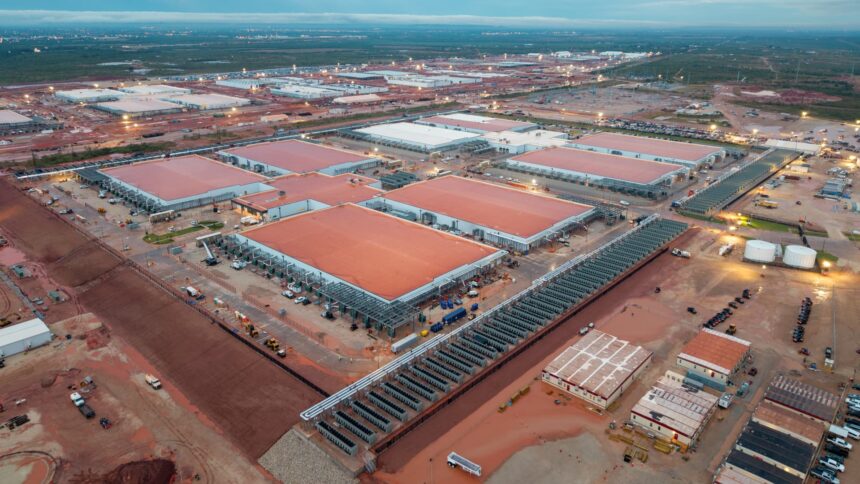
Texas is poised to surpass Virginia as the world’s largest data market, according to a recent report from JLL. This shift marks a significant transformation in the data center sector, which has witnessed unprecedented growth recently. With major construction activities expanding beyond traditional markets, approximately 64% of the ongoing 35-gigawatt construction pipeline is now located outside of established areas like Virginia, highlighting a broadening landscape in the industry.
Data center vacancies, which were reported to be a historic low of just 1% at the end of 2025, have remained exceptionally low for the second consecutive year. Andy Cvengros, executive managing director and co-lead of U.S. data center markets at JLL, noted that this sustained low vacancy rate supports the notion that there are no widespread concerns of a market bubble. In fact, nearly all of the new construction work—92% of the capacity currently being developed—has already been pre-committed by investment-grade tenants. This trend indicates a likely continuation of low vacancy rates through at least 2030.
The factors driving the growing demand in this sector include hyperscalers and advancements in artificial intelligence. JLL emphasized that the top five hyperscalers are projected to invest around $710 billion in capital expenditures by 2026 for essential infrastructure development. Correspondingly, lenders seem keen to participate in this growth, providing a remarkable $75 billion in total financing last year.
In light of the strong demand, some firms are adopting short-term strategies to navigate the rapidly evolving landscape. Nuveen, a global real estate development company, is focusing on a build-and-sell strategy to mitigate risks while capitalizing on the current market conditions. Chad Phillips, global head of Nuveen Real Estate, expressed confidence that the next five years would not see an oversupply situation, although he acknowledged the unpredictability of long-term trends.
Nevertheless, the industry does face significant challenges, particularly concerning infrastructure constraints, especially in power availability. The timelines for grid connections can stretch to an average of four years or more, prompting major tenants to secure power capacity well in advance. This situation is driving a movement toward new markets with greater power availability. According to Andrew Batson, global head of data center research at JLL, many companies are even exploring onsite power generation as a means to mitigate risk, though they primarily desire long-term grid connectivity.
As Texas continues its rise in the data center market, the dynamics of supply, demand, and infrastructure will play a crucial role in shaping the future of the industry. The ongoing investments and strategic decisions being made in response to these market pressures will be pivotal in navigating the next chapters of this evolving landscape.