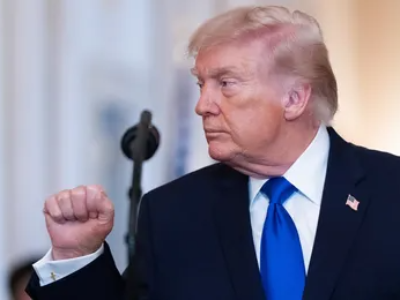
In a significant address to Congress marking his first State of the Union during his second term, President Trump emphasized a series of economic accomplishments while seeking to galvanize support as midterm elections approach. The president touted record highs in the stock market, with the Dow Jones Industrial Average reportedly surpassing the 50,000-point mark, and asserted that inflation rates were in freefall.
Trump expressed disappointment over a recent Supreme Court ruling that rejected the imposition of tariffs, which he argued had played a crucial role in enhancing stock market performance. He suggested that tariffs could pave the way for an alternative to the current income tax system, saying, “Over time, as in the past, tariffs paid by foreign countries will largely replace the modern income tax system.”
The address addressed a diverse range of issues, including the economy, immigration reform, advancements in technology, and international relations, particularly concerning Iran and Venezuela. Trump reiterated his commitment to making immigration more accessible through legal channels and framed Venezuela as a burgeoning ally, announcing the receipt of 80 million barrels of oil from the Latin American country.
He further called for tech companies to take on more responsibility, insisting they develop their own electricity sources and establish factories. Trump pointed out that the outdated power grid would not suffice for the rising demands of artificial intelligence and technological advancements.
On the subject of healthcare, Trump claimed to have curbed excessive prescription drug prices and introduced a new retirement savings plan aimed at assisting Americans in building their financial futures. He asserted that mortgage rates were at their lowest in four years, positioning low interest rates as a solution to ongoing housing challenges.
In contrast, the president’s remarks come at a critical juncture marked by challenges to his key policies. Following the Supreme Court’s ruling on tariffs and a political stalemate over immigration funding leading to a partial shutdown of the Department of Homeland Security, Trump is navigating a turbulent landscape. Moreover, he indicated a preference for resolving tensions with Iran through diplomatic channels while maintaining that Iran must not be allowed to develop nuclear weapons.
Lastly, Trump called on Congress to enact legislation that would prohibit lawmakers from trading stocks, emphasizing the necessity to prevent conflicts of interest and ensure transparency among elected officials.
As the address unfolded, Trump sought to energize his base while addressing pressing national concerns, aiming for a resurgence in public approval ahead of the impending elections.