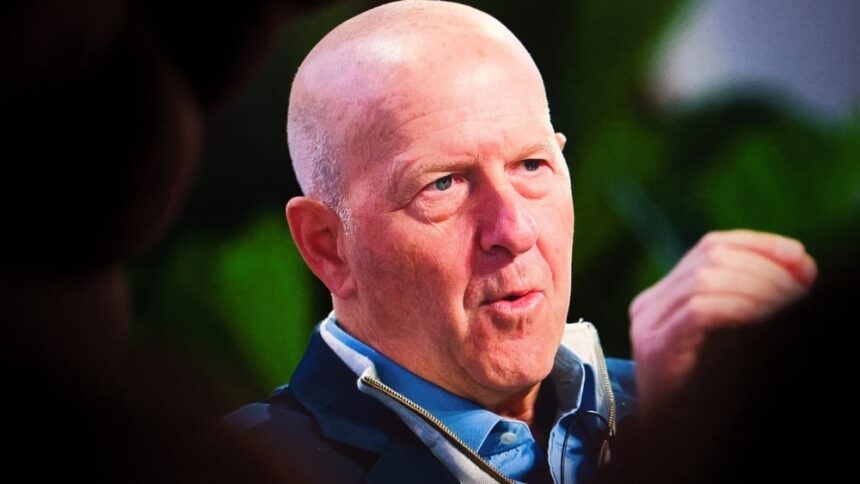
At a recent tech and finance conference hosted by Donald Trump Jr. and Eric Trump at Mar-a-Lago, Florida, Goldman Sachs CEO David Solomon shared a surprising development: he now owns a “very, very limited” amount of Bitcoin. This admission represents a notable shift from his previous stance, where he expressed skepticism about Bitcoin’s value proposition.
During his address, Solomon characterized his acquisition of Bitcoin as a curiosity-driven decision rather than a strong endorsement of its future prospects. “I’m an observer of Bitcoin,” he remarked, indicating a more exploratory approach to the cryptocurrency.
This change in attitude diverges sharply from comments he made in July 2024 when he labeled Bitcoin as a “speculative investment” with “no real use case.” Solomon’s newfound interest comes amid a growing acceptance of cryptocurrencies on Wall Street, especially following the launch of spot Bitcoin ETFs in January 2024. Additionally, the current administration’s pro-cryptocurrency stance may have contributed to this evolving landscape.
At the World Liberty Forum, Solomon dismissed the notion that cryptocurrencies are in direct competition with traditional financial systems. He emphasized the importance of tokens in the future economy, even as he called for clearer regulations within the sector. In his remarks, he asserted that those who believe cryptocurrencies can operate without regulatory oversight might consider relocating to El Salvador, a country that has adopted a more lenient stance towards digital currencies.
The legislative landscape surrounding cryptocurrencies has become critical, particularly regarding the proposed Clarity Act, which aims to establish a structured framework for the cryptocurrency market. Although this bill passed in the House last July, it faces hurdles in the Senate, particularly concerning debates over stablecoin rewards. Banks have raised concerns about the potential for deposit flight to these alternatives, while cryptocurrency advocates argue that traditional financial institutions are trying to stifle competition.
Recent statements from notable industry leaders have sparked optimism regarding the Clarity Act. Coinbase CEO Brian Armstrong expressed confidence during a recent earnings call that the bill could pass soon. Similarly, Ripple CEO Brad Garlinghouse speculated a 90% chance for its passage by the end of April, citing ongoing dialogues between banks and cryptocurrency representatives at the White House.
As the landscape evolves, investors are increasingly exploring diverse opportunities. Platforms like Kraken Pro are allowing users to trade digital assets alongside traditional stocks, benefiting from advanced tools and liquidity to execute complex strategies. These developments reflect a broader trend promoting asset diversification, as many investors seek to manage risks across varied markets and sectors.
This movement towards integrating cryptocurrencies with traditional finance breaks new ground, with thought leaders advocating for a balanced approach that maintains regulatory oversight while fostering innovation. The discussions around regulatory clarity will likely continue to shape the future of both cryptocurrencies and their integration within existing financial frameworks.