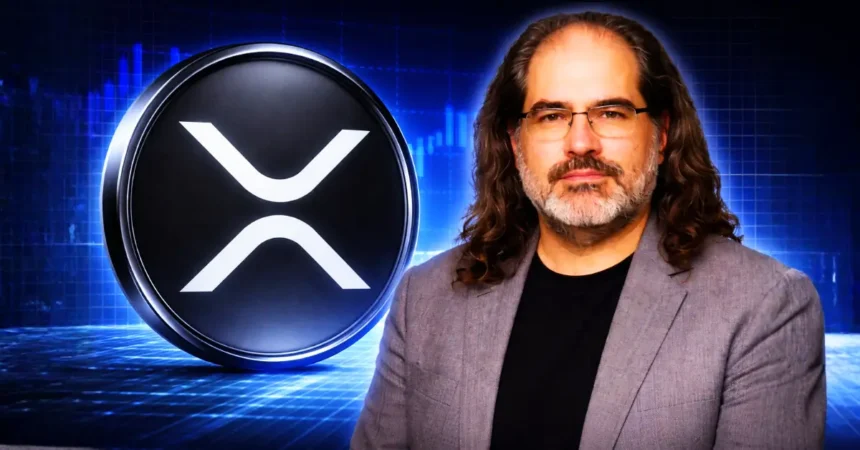
A significant discussion has emerged within the cryptocurrency community following David Schwartz, Chief Technology Officer at Ripple, sharing his insights regarding XRP and the XRP Ledger. Schwartz addressed various topics openly, focusing particularly on the inherent design of XRP aimed at preventing double-spending, a crucial issue faced by all blockchain systems.
In his statements on X, Schwartz emphasized that the XRP Ledger was intentionally constructed to ensure that Ripple itself could not exert control over it. He explained that the architecture of the XRPL is such that Ripple is incapable of censoring transactions, reversing payments, or engaging in double-spending—even under duress. Schwartz acknowledged the potential pressures Ripple might face from U.S. judicial authorities or regulatory bodies, noting that as a company based in the U.S. with investors, compliance with legal orders is necessary. However, it was precisely this need for compliance that drove Ripple’s decision to relinquish control. He contended that if Ripple had the capability to modify transaction records or suspend the ledger, it could be compelled to do so, which posed a risk to the integrity of the network.
His assertion that the best method to avoid succumbing to outside influences is through technical decentralization resonated strongly with the community.
Discussions quickly turned to Bitcoin, with some critics asserting that XRP’s Unique Node List (UNL) might lead to centralization issues. Schwartz countered these claims, suggesting that arguments emphasizing decentralization often fail to consider the broader picture. He illustrated this point by likening XRP’s coordination model to Bitcoin’s foundational decisions. He noted that the original mining algorithm was chosen by Satoshi, which created an inherent challenge for the community in changing it. When Bitcoin and Bitcoin Cash diverged, there was no central authority mediating the conflict; instead, both factions simply proposed their own rules, and users made their choices accordingly. Schwartz posited that a similar outcome would unfold on the XRPL if disagreements arose, with different software versions and validators being put forward for node operators.
Despite Schwartz’s defenses, the debate about decentralization continues to ignite passions across the crypto landscape. Some commentators maintained that the process of selecting a Unique Node List could result in coordination challenges, leaning toward centralization. Schwartz acknowledged that many discussions around decentralization often overlook practical realities, emphasizing that even within Bitcoin’s structure, nodes can individually reject invalid transactions yet must still reach consensus through the broader network.
From his perspective, decentralization extends beyond philosophical deliberations; it is a practical strategy to bolster the network’s credibility and resilience against external pressures. The ongoing conversation highlights an essential, evolving debate within the cryptocurrency community about the definitions and realities of decentralization and control in blockchain technology.