As investors navigate the evolving landscape influenced by artificial intelligence, a new investment philosophy is emerging, aptly termed the “Halo trade.” This investment strategy focuses on “heavy assets, low obsolescence,” signaling a shift toward companies possessing tangible, productive assets that may be less susceptible to AI disruptions. Industries such as energy and transportation infrastructure are gaining attention as investors reconsider their portfolios.
Despite a challenging start to 2026 for major US technology companies, the Halo trade has propelled UK and EU stock markets to unprecedented heights by the end of February. A recent report from Goldman Sachs indicates that their collection of over 100 high-spending companies has outperformed a comparable group of less asset-intensive firms by 35% since 2025. Goldman attributes this trend to a renewed focus on “asset intensity” as a critical factor influencing valuations and financial returns.
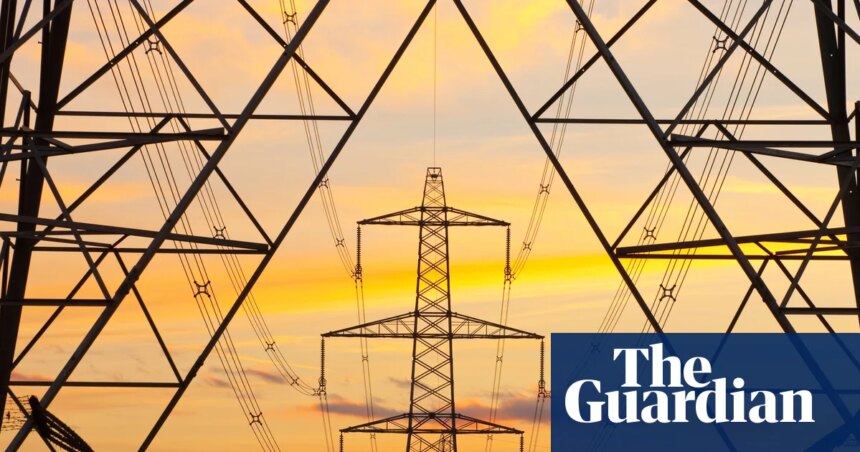
In their assessment, Goldman Sachs identifies Halo businesses as those characterized by significant physical capital, where barriers to replication are dictated by cost, regulation, time to construct, or engineering challenges. Examples encompass grids, pipelines, utilities, transport infrastructure, critical machinery, and long-cycle industrial capacity. Recent analysis highlights a notable narrowing in the valuation gap between capital-intensive and capital-light companies in Europe, with capital-intensive firms now commanding higher ratings on a price-to-earnings basis.
Investment strategist Ruben Dalfovo from Saxo emphasizes the importance of companies that manage their supply chains effectively, such as energy infrastructure firms and major players in the oil and gas sector. He also pointed out that essential services like waste collection, water supply, and regulated power networks are often underappreciated despite their reliable revenue streams. “They tend to show up when investors prioritize reliability over excitement,” Dalfovo noted.
The FTSE 100, heavily weighted with traditional sector stocks, has set a series of record highs throughout 2026. Notably, February was its strongest month since November 2022, marking eight consecutive months of gains. Ipek Ozkardeskaya, a senior analyst at Swissquote, remarked on the investor shift away from high-priced AI and growth stocks toward firms with enduring infrastructures and long-lived assets. She stated that the FTSE 100 is ideally positioned to benefit from new inflows associated with the Halo trade, driven particularly by energy and mining sectors.
The pan-European Stoxx 600 index has also reached record levels recently, aided by a shift in investments from US technology firms into more stable sectors. Cyprus-based oil tanker shipping company Frontline has emerged as the top performer within the Stoxx 600, enjoying a remarkable 57% jump in stock price since the beginning of the year. Similarly, Norwegian company Kongsberg Gruppen, which provides high-tech systems for marine, aerospace, defense, and energy sectors, has seen a 46% uptick in stock value.
In stark contrast, software and data-driven enterprises have faced increasing pressure in recent weeks. The competitive landscape shifted as AI companies introduced services that pose challenges to traditional revenue models. Last week, a speculative report from Citrini Research raised alarms, suggesting a future where autonomous AI systems could significantly disrupt the US economy, impacting employment and destabilizing financial markets. Such speculations add to the complex dynamics investors are currently monitoring in this rapidly evolving economic environment.