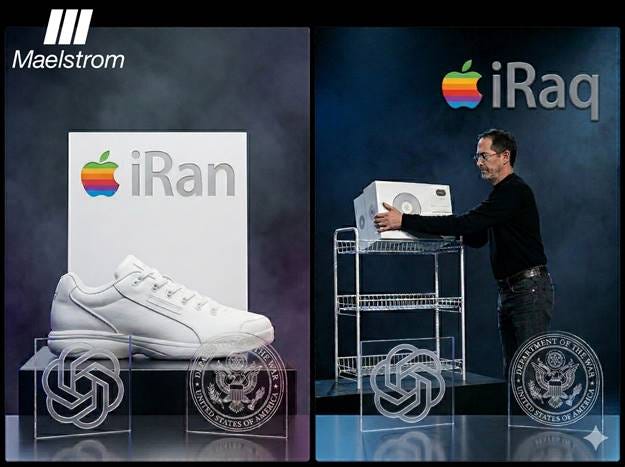
In a controversial release, the US Department of War and OpenAI have allegedly introduced a new Apple iOS that serves as an offensive agentic AI weapon aimed at instigating regime changes in various nations. This technology, once integrated into a targeted country’s cyber infrastructure, reportedly seeks to eliminate existing governments, often leading to extensive bombing campaigns against both military and civilian facilities. Such actions, the report claims, could result in catastrophic casualties and economic ramifications amounting to hundreds of billions or even trillions of dollars. This strategy, critics argue, appears to funnel money from American taxpayers and local populations into the private wealth accounts of elite financial institutions.
Historical patterns show that discontent among local populations often arises in response to these interventions, ultimately resulting in the rise of repressive regimes. This cycle raises concerns, especially with the impending OpenAI IPO—suggested to be valued at a forward P/E of infinity—prompting market analysts to question the implications for investment portfolios based on future military engagements.
Since 1985, there has been a consistent trend of American military interventions in the Middle East, with every US president engaging in military actions against various countries during their tenure. This precedent raises alarms as it aligns closely with the latest rumors regarding President Donald Trump’s reported interest in further actions against Iran, particularly following the alleged assassination of Iranian Supreme Leader Ayatollah Khamenei.
The discourse surrounding these military actions also highlights the Federal Reserve’s behavior in reacting to such conflicts. Historical data indicates a tendency for the Fed to reduce interest rates during or after significant military engagements. For instance, following the Gulf War in 1990, the Fed hinted at monetary easing, which was ultimately put into action in subsequent meetings. Similar patterns were observed during the Global War on Terror in 2001 and, indirectly, during the troop surge in Afghanistan under President Barack Obama.
Currently, speculations arise regarding President Trump’s administration and its potential financial strategies connected to Iran. With an expectation that the Fed would ease monetary policies to facilitate war financing, analysts are keeping a close watch on market movements. Investors are advised to adopt a cautious stance, considering that the timing of financial commitments—especially in cryptocurrencies like Bitcoin—might hinge on the Fed’s response to such geopolitical developments.
As the situation continues to evolve, stakeholders are reminded to weigh their investment decisions carefully, focusing on the interplay between military actions and financial policies. The market’s reactions in the face of military endeavors could present critical opportunities or pitfalls for investors.