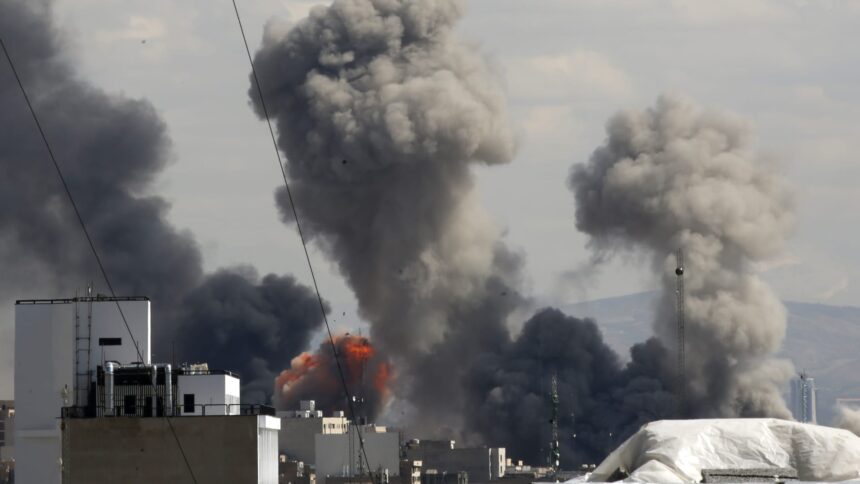
Thick plumes of smoke billowed over the residential neighborhoods of Tehran as airstrikes struck the city, following a series of coordinated attacks by U.S. and Israeli forces known as Operation Epic Fury. The explosions reverberated through the Iranian capital, marking a significant shift in international politics with widespread implications for global markets.
In the wake of these military actions, analysts are grappling with the immediate and long-term ramifications for investors and markets worldwide. The last 48 hours have highlighted the intrinsic connection between military operations and economic stability, challenging the existing global order established since World War II.
The initial response from Middle Eastern stock markets has been largely negative. During the first trading session post-attacks, major exchanges in Saudi Arabia, Oman, and Bahrain recorded declines. Although some markets, such as those in Dubai and Abu Dhabi, are preparing to resume trading, uncertainty looms large over the entire region.
Oil markets are expected to bear the brunt of the volatility sparked by these strikes. Forecasts indicate that Brent crude prices could soar above $80 a barrel, driven by an anticipated disruption in oil supply. This volatility is exacerbated by the closure of the Strait of Hormuz, a critical shipping route, where significant shipping lines have suspended vessel transit amid retaliatory strikes reportedly initiated by Iran’s Revolutionary Guard against oil tankers.
The havoc extended beyond oil as the air travel sector faced immediate chaos. Almost the entire region’s airspace has been closed since the strikes, leading to the cancellation of over 1,500 flights on Sunday alone. Additional delays in global air travel have compounded the difficulties, as airlines scramble to arrange repatriation flights and reestablish routes.
In a surprising intersection between military conflict and technological advancement, reports emerged detailing the role of artificial intelligence in the strikes. The U.S. military utilized Anthropic’s Claude AI technology for operational support. However, the tech company’s status was complicated by its recent blacklisting by the Pentagon, raising questions about regulatory implications and the military’s reliance on commercial technologies.
As the world watches and waits, the future remains uncertain. President Donald Trump indicated that U.S. military operations are progressing “ahead of schedule,” which only adds to the anxiety gripping markets already fraught with unpredictability. Investors are left to navigate the unknowns, with a keen eye on developments that promise to alter the landscape of both regional and global politics.