Global markets faced significant turmoil on Tuesday, primarily driven by escalating tensions between Iran and the United States and its allies, which sent stocks plummeting and energy prices soaring.
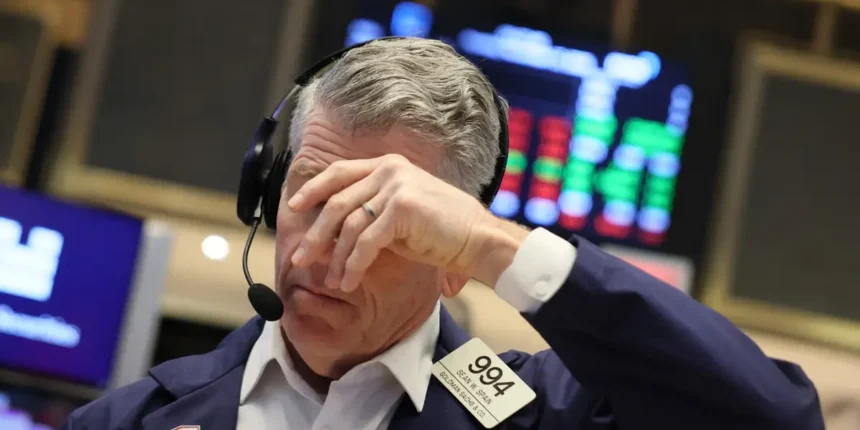
In Asia, Hong Kong’s Hang Seng Index closed down by 1%, while South Korea’s KOSPI experienced a steep 7% decline, marking its largest single-day drop in 19 months. European markets opened to similar declines, with Germany’s DAX falling by 4%, and both the UK’s FTSE 100 and France’s CAC 40 dropping around 3%. US stock futures hinted at a negative opening, with the S&P 500, Dow Jones Industrial Average, and Nasdaq 100 each down about 2%.
The energy sector saw sharp increases in crude oil prices, with Brent crude rising by 7% to approximately $83 per barrel and West Texas Intermediate also up around 7%, reaching about $76 per barrel. Natural gas prices saw an extraordinary spike, particularly in Europe, where futures for Dutch TTF, the benchmark price for natural gas, surged by 40% to over 60 euros per megawatt-hour. This dramatic rise was largely attributed to Qatar’s suspension of production at the world’s largest LNG export facility following an Iranian drone strike, which raised alarm as Qatar constitutes approximately 20% of the global LNG supply.
Cryptocurrency markets reflected the overall uncertainty, with Bitcoin dropping about 3% to around $66,850. Meanwhile, precious metals experienced declines, with gold and silver prices dipping about 1% and 7%, respectively.
Market analysts are grappling with the implications of the conflict in the Middle East on various sectors, particularly travel. Stocks of airline group IAG and hotel group Accor each fell by 6% amid growing concerns of continued travel disruptions. Conversely, energy firms in the US, such as Diamondback, Devon, and Coterra, saw their stocks rise by about 3%, buoyed by expectations of benefiting from the surge in oil and gas prices.
Dan Coatsworth, head of markets at AJ Bell, noted that the suspension of LNG production in Qatar is a crucial factor in driving gas prices higher globally. He warned that sustained high energy prices could exacerbate inflation, leading to potential increases in interest rates—an outcome typically detrimental to equity markets.
Further insights from Deutsche Bank highlighted historical data indicating the S&P 500 tends to fall more than 15% only when faced with significant oil price shocks that meet specific criteria, such as a spike in oil prices lasting several months, a major economic slowdown, or a hawkish central bank response to inflation. Analysts will be closely monitoring the situation in the days to come to see if any of these conditions materialize.