Global markets faced significant declines on Wednesday, driven by escalating tensions in the Middle East and the ongoing conflict that has effectively closed the pivotal Strait of Hormuz. U.S. President Donald Trump attempted to ease concerns about possible long-term disruptions to the global oil market by offering U.S. Navy escorts for tankers traversing the strait. Meanwhile, the U.S. military reported that “not a single Iranian ship” was currently operating in these strategic waters.
The closure of the strait—where around 20% of the world’s oil supplies typically flow—has led to fears of a protracted energy supply crisis affecting markets internationally. This sentiment was echoed by David Solomon, CEO of Goldman Sachs, who stated that it would take “a couple of weeks” for markets to fully absorb the ramifications of the U.S.-led military operations in the region.
Amid this instability, Asian stock markets were notably impacted, with South Korea’s benchmark Kospi index plummeting as much as 11.3% before recovering slightly to a 7.7% drop, prompting a suspension of trading. Japan’s Nikkei 225 also declined by 3.9% in Tokyo. Oil prices have been on the rise as investors brace for significant supply disruptions, with Brent crude reaching $82.53 per barrel after a 1.4% increase on Wednesday, marking its highest closing price since January 2025.
The U.S. military has actively engaged in the conflict, destroying 17 Iranian ships, including a submarine, since the weekend, as confirmation from Brad Cooper, commander of the U.S. Central Command, detailed. He stated that, as of Tuesday, there were no Iranian ships operational in the Arabian Gulf, Strait of Hormuz, or Gulf of Oman.
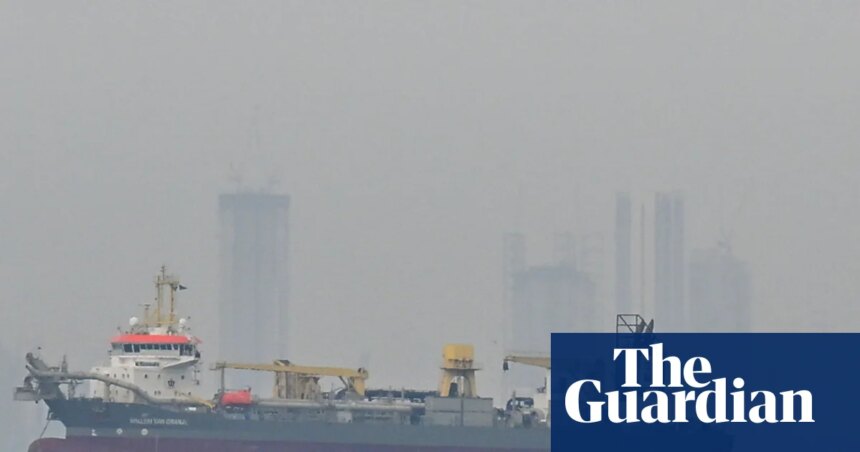
Shipping activity through the Hormuz strait—historically a crucial conduit for oil and gas—is now nearly at a standstill. The United Kingdom Maritime Trade Operations reported incidents impacting vessels near the United Arab Emirates and Oman amid escalating threats in the area, further contributing to the overall tension.
In an effort to restore confidence, Trump reiterated that the United States would ensure the “FREE FLOW of ENERGY to the WORLD,” promoting political risk insurance for vessels operating in the Gulf at a “very reasonable price.”
As concerns grew over the long-term markets reaction, Wall Street was expected to open lower in New York, reflected in pre-market trading data. Solomon remarked on the surprising resilience of the markets in the face of these geopolitical shifts, indicating that while there was significant bloodletting in Asian markets, U.S. markets might not yet fully understand the implications of current events.
“I think it’s gonna take a couple of weeks for markets to really digest the implications of what has happened, both in the short term and the medium term,” he commented. “And I can’t speculate as to how that would play out.”