A significant market downturn resumed across both Europe and the United States on Thursday, triggered by escalating concerns regarding the ongoing conflict in the Middle East. Initial recoveries in European markets, buoyed by a rebound in Asia, dissipated as trading progressed, leading to sharp declines on Wall Street by early afternoon.
The ongoing conflict involving the US-Israel alliance and Iran has been a catalyst for rising oil and gas prices, igniting fears of a renewed inflationary shock which dampens market expectations for potential interest rate reductions. In the UK, the FTSE 100 index closed down by 1.5%, equating to a loss of 154 points, bringing its total down to 10,414. Similarly, Germany’s DAX and Italy’s FTSE MIB both registered a decrease of 1.6%. France’s CAC 40 fell by 1.5%, while Spain’s IBEX experienced a modest drop of 1.4%.
Across the Atlantic, the impact was similarly profound with the Dow Jones Industrial Average down by 2%, the S&P 500 decreasing by 1.3%, and the Nasdaq slipping approximately 1%. Concurrently, oil prices continued their upward trend, with Brent crude increasing by 4% to approach $85 per barrel, while European gas prices surged over 3%. Notably, Brent crude has seen a striking 15% rise in just five days.
Market analysts, such as Danni Hewson from AJ Bell, highlighted the rapid disappearance of optimism that had initially buoyed markets. They noted that the implications of the Middle Eastern conflict are prompting a reevaluation of interest rate expectations for the upcoming months. In the UK, the domestically focused FTSE 250 index closed down by 0.9%, settling at 22,700.20.
Airlines have been significantly impacted, with Wizz Air announcing the cancellation of flights to and from Israel, Dubai, Abu Dhabi, and Amman until mid-March. The carrier warned of a projected €50 million hit to its annual profits due to rising jet fuel costs, resulting in an 11.3% drop in its stock price. Other major UK airlines, including easyJet and IAG, which owns British Airways, also experienced declines, with shares dropping by 5% and 2%, respectively.
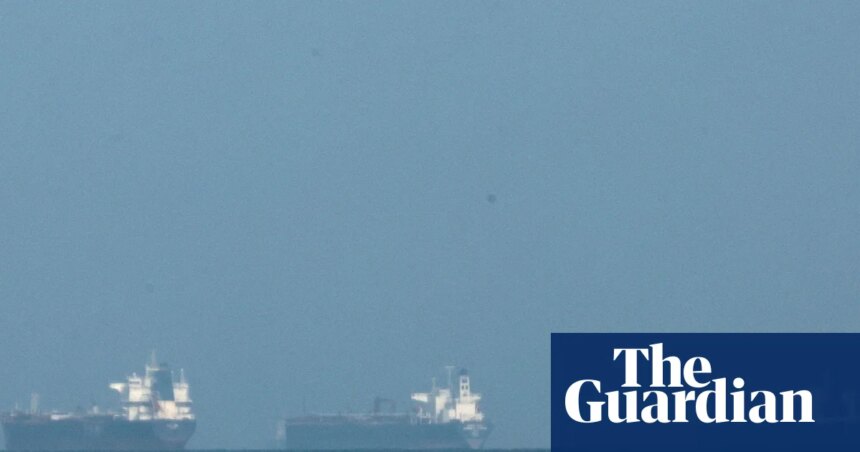
In the US, treasury yields were poised to rise for the fourth consecutive day as the upsurge in oil prices caused skepticism regarding immediate interest rate cuts from the Federal Reserve. The situation’s potential for improvement hinges on the reopening of the Strait of Hormuz, through which approximately 20% of global oil and liquefied natural gas supplies pass. Since the weekend, Iran has effectively closed off this crucial maritime route, intensifying market anxieties.