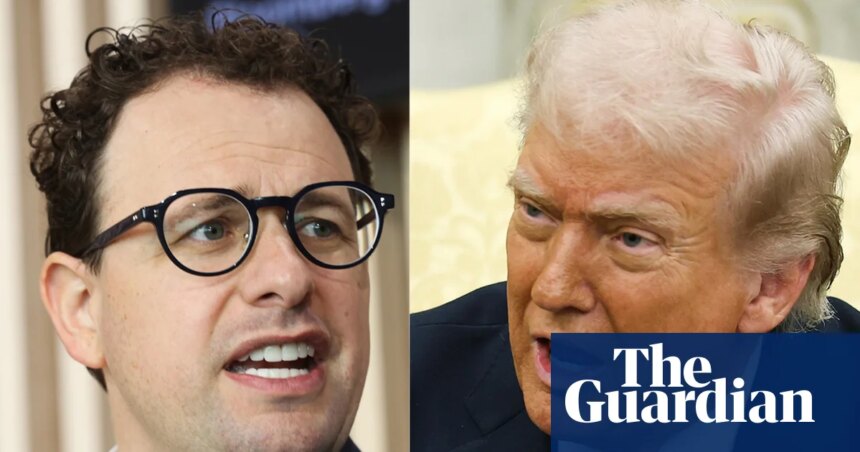
In a dramatic turn of events, former President Donald Trump declared on Thursday that he had severed ties between the U.S. military and the AI startup Anthropic, an assertion that coincided with reports confirming the resumption of negotiations between the Department of Defense (DoD) and the company. Trump claimed responsibility for what he described as firing Anthropic “like dogs” during an interview with Politico, criticizing the company for its actions regarding government collaborations.
Hours after Trump’s remarks, the Pentagon took a significant step by officially designating Anthropic as a “supply chain risk.” This unprecedented label bars all government contractors from utilizing the company’s technology, a move that reflects rising tensions between the AI sector and federal authorities. “DoD officially informed Anthropic leadership that the company and its products are deemed a supply chain risk, effective immediately,” a Pentagon official stated, as reported by Bloomberg.
Despite the tumult, negotiations had reportedly resumed between the DoD and Anthropic regarding the use of Anthropic’s AI technology, which includes well-regarded products like the Claude chatbot and coding assistant. These tools have been integrated into Palantir’s Maven system, a critical asset for military intelligence recently employed in operations against Iran, as highlighted by the Washington Post.
The CEO of Anthropic, Dario Amodei, has engaged in discussions with Emil Michael, the undersecretary of defense for research and engineering. However, reports suggest a significant amount of animosity exists between the two. Trump’s recent directive barred the entire federal government from using Anthropic’s technology after the company declined a government deal. Concerns were raised about potential misuse of their models for mass surveillance or fully autonomous weaponry.
Following the directive, various departments, including state and treasury, began to cut their connections with Anthropic. Defense Secretary Pete Hegseth designated Anthropic as a “supply chain risk,” a move that prompted Amodei to plan legal action against the designation.
In a blistering internal communication that was leaked, Amodei criticized both the Trump administration and OpenAI, a rival firm that quickly filled the void left by the rift between Anthropic and the government by announcing its own military contracting deal. He labeled OpenAI’s CEO, Sam Altman, as “mendacious,” accusing him of engaging in what he termed “safety theater” in relation to the Pentagon’s assurances.
In a subsequent statement addressing the leaked message, Amodei expressed regret for the language used and clarified that it did not reflect his considered views. He emphasized that the internal post, written days earlier, had become an outdated assessment of the evolving situation.
The fallout from the Pentagon’s designation has the potential to inflict significant financial damage on Anthropic, with recent funding rounds valued at around $60 billion now jeopardized. In light of the crisis, Silicon Valley—particularly OpenAI—has rallied in support of Anthropic as it challenges its precarious new status.
As the Pentagon moved forward with punitive measures against Anthropic, it simultaneously advanced a contract with OpenAI to integrate its technologies into military operations within classified settings. This series of events drew backlash as public scrutiny grew, coinciding with a surge in the popularity of Claude’s application, which soared to the top of download charts in the U.S.
In response to the growing controversy, Altman acknowledged in internal communications that the company’s actions could be perceived as “opportunistic and sloppy,” reaffirming a commitment to amend their agreement with the Department of Defense while navigating the ethical complexities posed by the military’s use of AI technology.