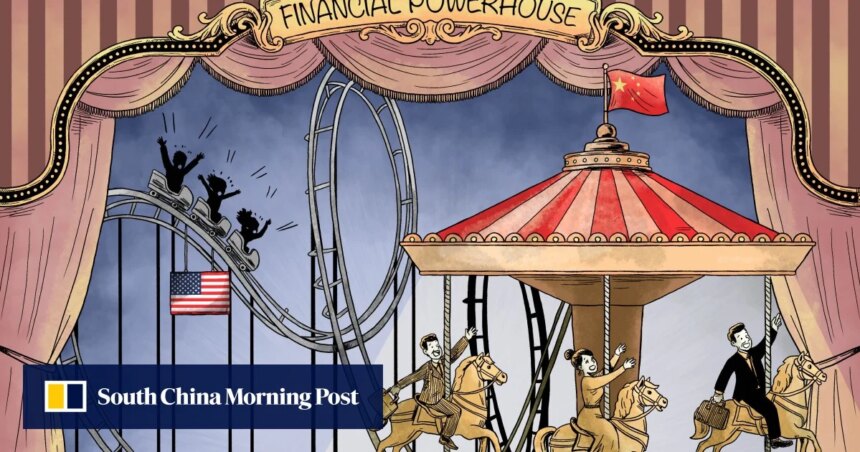
In a bold reassertion of priorities, China’s high-ranking policymakers have emphasized the urgency of mitigating financial risks and eradicating political corruption, aligning closely with President Xi Jinping’s long-term agenda. This focus comes as the country gears up for the annual ‘two sessions,’ which are pivotal meetings for the nation’s legislature and political advisory body.
Recent discussions have underscored the ongoing efforts to navigate financial challenges, with leaders acknowledging the need for vigilance in managing the economy. As China strives to position itself as a formidable player on the global financial stage, these reassurances come at a time when international markets are witnessing significant movements, such as the Dow Jones Industrial Average reaching unprecedented heights.
In the United States, the milestone of the Dow closing above 50,000 points was celebrated by former President Donald Trump, who anticipated even greater achievements. He attributed this success to his administration’s policies, suggesting a continued trajectory of economic growth and security driven by tariffs. This contrast highlights the contrasting strategies that each country employs in pursuing economic supremacy, as the U.S. emphasizes market-driven growth while China asserts a more state-directed approach.
Amid this international discourse, President Xi reinforced the narrative that China’s financial sector is fundamentally about serving the populace. In a recent speech, he articulated the government’s commitment to a system that prioritizes the welfare of the general public, in stark contrast to financial systems in other parts of the world, which he characterized as catering predominantly to the affluent.
As these themes of financial stability and anti-corruption resonate within Chinese policymaking circles, they signal an ongoing commitment to address challenges and foster economic resilience. Moving forward, the dual focus on these critical areas will be closely monitored as they play a significant role in shaping China’s approach to embedding itself as a global financial powerhouse. The outcomes of these discussions will likely influence both domestic policies and international perceptions of China’s economic direction as the world watches how the nation navigates its ambitions amidst rising global competition.