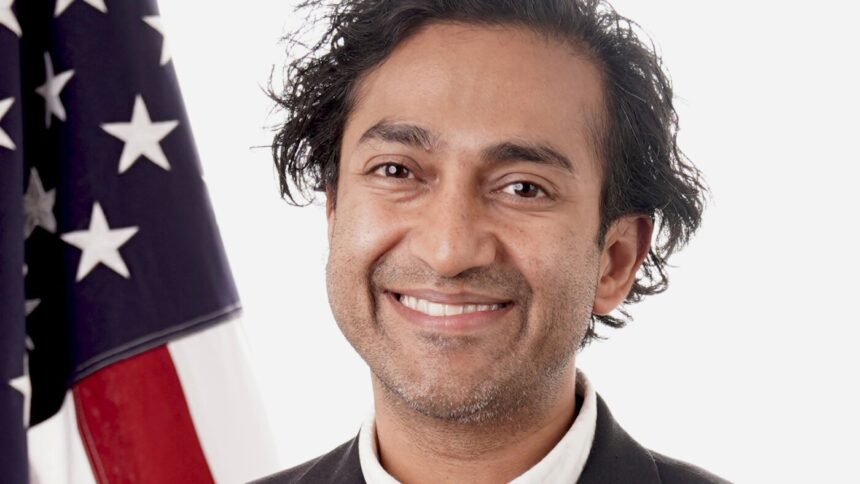
In a significant development within the U.S. Food and Drug Administration (FDA), Dr. Vinay Prasad, who has faced considerable scrutiny during his tenure as the agency’s vaccine chief, will be departing from his position once again. This marks his second departure in under a year, following a series of contentious decisions regarding the review processes for vaccinations and specialty drugs targeting rare diseases.
FDA Commissioner Marty Makary communicated this news to FDA staff via email late Friday, indicating that Prasad will officially leave at the end of April to return to his academic position at the University of California, San Francisco.
Prasad’s tenure has been tumultuous; he was briefly removed from his role last July due to conflicts with biotech executives, patient advocacy groups, and conservative allies of former President Donald Trump. His reinstatement occurred just two weeks later, bolstered by the support of Health Secretary Robert F. Kennedy Jr. and Makary.
The latest exit follows a series of high-profile criticisms aimed at the FDA’s decision-making, particularly regarding vaccines, gene therapies, and biotech drugs. Stakeholders, including companies, investors, and members of Congress, have expressed dissatisfaction with the agency’s recent policy reversals and the call for new clinical trials on products that had previously received approval.
In recent weeks, Prasad has faced backlash for several controversial decisions. Notably, he initially denied FDA review of a much-anticipated flu vaccine developed by Moderna that uses mRNA technology. This unusual rejection led Moderna to publicly challenge the decision, resulting in the FDA reversing its position just a week later and agreeing to review the vaccine, contingent on an additional study from the drugmaker.
The agency’s stance toward another drug company, UniQure, has also sparked significant debate. The company is working on an experimental gene therapy for Huntington’s Disease, which affects around 40,000 individuals in the U.S. The FDA’s demand for a new trial that includes performing sham surgery on some patients has raised ethical concerns, prompting company executives to criticize the request as contradictory to previous FDA guidance.
In an atypical move, the FDA held a press conference to defend its position against UniQure’s therapy, with a senior FDA official labeling the company’s original study as “stone cold negative,” a stark departure from the agency’s usual practice of offering carefully composed written statements on such contentious scientific discussions.
Throughout Prasad’s leadership, the FDA’s interactions with various drug developers have been marked by similar disputes, with over half a dozen pharmaceutical companies pursuing therapies for rare diseases receiving rejections or requests for additional studies. This has prompted concerns about prolonged development timelines and rising costs, complicating the pursuit of treatments vital for patients.
Prasad, known for his critical stance on the FDA’s existing review standards, has oscillated between streamlining the regulatory process and imposing new requirements that disproportionately affect innovative biotech companies. His simultaneous advocacy for expedited drug approvals and the imposition of new cautionary measures, particularly for COVID-19 vaccines, has left many within the FDA community and outside observers perplexed.