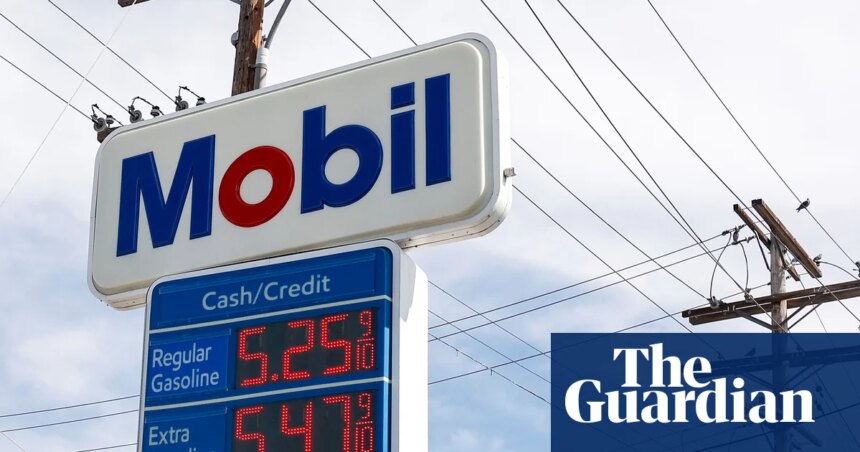
The ongoing conflict in Iran has led to a significant rise in gas prices across the United States, with California experiencing the most pronounced impact. Recent data from the American Automobile Association (AAA) indicates that the average price per gallon for gasoline in California has reached $5.20, while the national average stands at $3.47. This marks an increase of nearly $0.50 in the national average and a steeper rise of $0.55 in California since the onset of hostilities more than a week ago.
The situation escalated following coordinated attacks by the U.S. and Israel on Iran starting February 28, resulting in increased violence throughout the Middle East. This escalation has caused oil prices to surge past $100 a barrel for the first time in nearly four years. Concurrently, essential oil and gas facilities have sustained damage, and many ships carrying approximately 20 million barrels of oil daily have been stranded in the Gulf, exacerbating the supply chain issues.
The Strait of Hormuz, a critical chokepoint for global oil transport, sees around 20% of the world’s oil shipments daily, but it has been largely closed off due to ongoing tensions. Consequently, about 9 million barrels of oil per day have been rendered unavailable due to damages and preemptive safety measures, highlighting a dire supply deficit. Claudio Galimberti, chief economist at Rystad Energy, characterized the current situation as one of “extreme deficit,” underscoring the seriousness of the disruption.
Fuel prices were already on an upward trajectory due to seasonal demand and the transition to summer-blend gasoline. However, the conflict has accelerated these price hikes. In Los Angeles, for instance, a Chevron station was reported to charge as much as $8.21 per gallon. Local drivers, particularly those using their vehicles for business like Uber, expressed frustration over the surging costs, emphasizing that they were already dealing with high prices before the conflict began.
In response to the situation, former President Donald Trump has downplayed concerns over the rising prices, suggesting they would decrease “very rapidly” once the conflict resolves. His administration has noted that any increases in prices may persist for weeks but would not extend for months.
White House Press Secretary Karoline Leavitt labeled the price rises as “a short-term disruption for a long-term gain,” framing it within the context of a larger strategy to dismantle what she referred to as the “rogue Iranian terrorist regime” and to restore free energy transit through the Strait of Hormuz.
Despite California’s longstanding status as the state with the highest gas prices, attributed to taxes, environmental regulations, and a notable decline in refining capacity, Governor Gavin Newsom’s office shifted the blame for this latest spike to the current administration. In a statement circulated on social media, the governor’s office pointed out that California gas prices had remained below $5 for nearly two years prior to the recent conflict, asserting that “this is because of Trump’s war with Iran.”