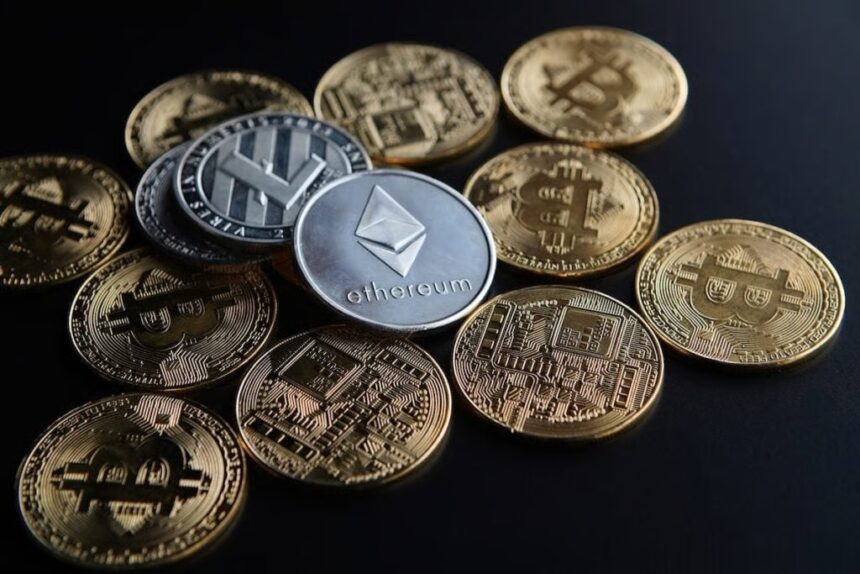
Aon recently made a significant leap in the insurance and financial services sector by announcing the first known stablecoin insurance premium payment among major global brokers. This groundbreaking move involved settling payments with Coinbase and Paxos, utilizing USDC on the Ethereum blockchain and PayPal USD on the Solana network.
As part of this initiative, Aon successfully completed a proof of concept by settling insurance premiums across multiple blockchain platforms. The transactions highlighted not only the firm’s commitment to innovation but also the growing flexibility in utilizing leading stablecoins and blockchains for financial operations. Tim Fletcher, the CEO of Aon’s financial services group, expressed that this advancement is crucial as clients seek assurance that the increasing speed and innovation in the financial landscape do not compromise control.
Significantly, this initiative was made possible by the passage of the GENIUS Act in 2025, which established a federal regulatory framework for stablecoins, providing the necessary clarity that supports such innovative endeavors. This regulatory landscape, combined with increasing client demand and a shift towards digital-first financial models, creates a conducive environment for broader adoption of stablecoin transactions.
Coinbase’s Institutional Co-CEO, Brett Tejpaul, emphasized the operational advantages of this setup by stating that using stablecoins, such as USDC, to settle insurance premiums allows Aon to scale its financial operations efficiently, with enhanced transparency and a robust infrastructure. Adam Ackermann, the Head of Treasury at Paxos, reinforced the notion of stablecoins as essential components of financial infrastructure, noting that their collaboration with Aon exemplifies how regulated stablecoins like PYUSD can be directly integrated into treasury workflows for improved capital management.
This initiative could potentially expedite settlements and payment efficiencies for clients operating in the digital asset market while aligning risk transfer more effectively with capital movement. Aon’s Treasurer, John King, acknowledged that although broader adoption of stablecoins for corporate payments is still evolving, the long-term implications are promising. He indicated that the firm aims to better understand these mechanisms’ roles within established systems, positioning them to evaluate future efficiencies and cost-saving opportunities as the technology continues to mature.
Aon’s work in this space builds upon its existing digital-asset risk advisory capabilities, showcasing its ability to integrate a deep understanding of insurance and risk management directly into its operations.
In the context of its market performance, Aon’s stock is currently trading at $332.87, aligning with the 20 EMA, while a bearish Supertrend indicator at $343.68 poses resistance above the current price. Furthermore, the stock is facing significant downward pressure from a descending trendline originating from its peak at $410, culminating in sellers rejecting previous attempts to break above the $360–$370 trendline. Critical support levels are identified at the psychological benchmark of $330 and within the $315-$320 region established during earlier capitulation lows.