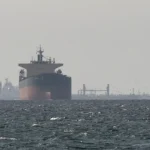
Taipei, Taiwan – As the Strait of Hormuz remains closed to maritime traffic amid escalating geopolitical tensions between the United States and Iran, governments and businesses across Southeast Asia are urgently implementing measures to prevent energy shortages.
In response to the crisis, Philippine government offices have adopted a four-day work week, while officials in Thailand and Vietnam are encouraged to work from home and limit travel. The Myanmar government has instituted alternating driving days to alleviate fuel demand. These initiatives highlight the widespread anxiety over energy supply disruptions.
To further stabilize fuel prices, governments are directly intervening in the market. Thai Prime Minister Anutin Charnvirakul announced a temporary cap on diesel prices, and Vietnam has tapped into its fuel price stabilization fund, according to state media reports. Economists suggest that these measures are proactive steps to manage a potentially dire supply situation.
Southeast Asia, despite having significant fossil fuel reserves, is heavily dependent on imported oil and gas, much of which transits through the vital Strait of Hormuz. Data from the U.S. Energy Information Administration indicates that in 2024, around 84 percent of the crude oil and 83 percent of liquefied natural gas (LNG) flowing through the Strait was destined for Asia. Major importers like China, India, Japan, and South Korea accounted for nearly 70 percent of these shipments, with the Philippines, Thailand, Malaysia, and Brunei particularly vulnerable to disruptions in crude supplies.
Alloysius Joko Purwanto, an economist at the Economic Research Institute for ASEAN and East Asia (ERIA), pointed out that these countries rely on imports for 60-95 percent of their crude supply, which raises alarm considering the ongoing supply chain shocks. Even Indonesia, a significant oil producer, relies on imports for over one-third of its crude oil supply.
In light of the closure of the Strait of Hormuz, Vietnam announced plans to procure approximately 4 million barrels of crude oil from non-Middle Eastern countries, a move expected to cover just six days of consumption, according to Sam Reynolds at the Institute for Energy Economics and Financial Analysis. He emphasized that without new crude inflows, Vietnam faces a high risk of fuel shortages.
Southeast Asia’s fuel reserves are notably smaller compared to those in Northeast Asia. For example, while Thailand has enough reserves for about 65 days, Japan’s reserves could last 254 days, and South Korea’s and China’s could last 208 and 120 days, respectively. The situation is further complicated by the need to supplement various petroleum products derived from refining crude oil, such as gasoline and jet fuel.
Countries lacking robust refining capabilities, including Laos, Cambodia, and Myanmar, face heightened stress as they rely on imports of refined products from their neighbors. With rising restrictions on oil exports within the region, companies are being forced to declare force majeure, meaning they may be unable to meet contractual obligations due to supply shortages.
In Thailand, the government has already imposed a ban on oil exports, with exceptions only for Cambodia and Laos, while China has ordered state-owned firms to suspend fuel exports. In the wake of these disruptions, some petrochemical companies have begun shutting down operations due to the unavailability of essential raw materials, indicating the potential for widespread economic repercussions.
The Economist Intelligence Unit forecasts that global oil prices could average around $80 per barrel in 2026, coupled with elevated natural gas prices, which may inflate costs and hinder growth across Asia. Priyanka Kishore of Asia Decoded warned that if the situation does not improve soon, the region could face an economic downturn. “In a few weeks, we may be discussing significant repercussions if the Strait remains closed,” she said, underscoring the urgent need for resolutions in the ongoing crisis.