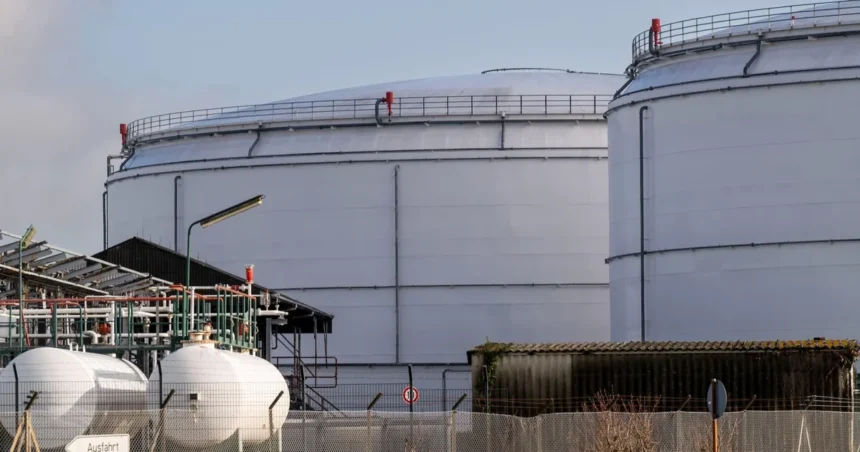
In a significant move to control soaring oil prices, the Trump administration has announced the release of 172 million barrels of oil from the Strategic Petroleum Reserve (SPR). This action marks the second-largest release in the reserve’s history, following the unprecedented withdrawal of 180 million barrels by the Biden administration in 2022. The decision comes in the wake of ongoing tensions arising from the conflict with Iran, which has pushed oil prices above $100 a barrel.
The release is set to commence next week and will occur over a 120-day period. Following this withdrawal, the nation’s Strategic Petroleum Reserve will be reduced to approximately 243 million barrels, indicating a staggering 41% decrease from its current level of 415 million barrels. This reduction will place the reserve at its lowest levels since 1982, according to an analysis of data from the Department of Energy conducted by CBS News.
Historically, the SPR has served as a buffer against oil supply disruptions, with the last major drawdown occurring in March 2022 when the Biden administration released 180 million barrels to mitigate rising gas prices exacerbated by the Ukraine war. The Biden administration also utilized the reserve to release 50 million barrels in 2021 as part of measures to address pandemic-induced supply chain issues.
As of March 2022, the average price of gas in the United States was about $4.23 per gallon. Current data from AAA indicates an average price of $3.63 per gallon, a notable increase from $2.98 before the onset of the Iran conflict. In a statement, U.S. Secretary of Energy Chris Wright assured that the United States plans to replenish the strategic reserves with approximately 200 million barrels within the next year.
The SPR was established in 1975 under the Energy Policy and Conservation Act, designed as a response to the energy crisis of the 1970s. The first test sale occurred in 1985, with subsequent withdrawals made during past emergencies, including a release of 32 million barrels in 2021 due to pandemic-related disruptions and prior responses to natural disasters, such as sales following Hurricanes Ida and Katrina.
As the nation navigates the complexities of energy supply and geopolitical tensions, the forthcoming oil release underscores a critical intervention aimed at stabilizing prices and ensuring energy security amid fluctuating market conditions.