As New Zealanders closely monitor the unfolding events in the Middle East, many are also anxiously checking their KiwiSaver balances. What they see goes beyond mere numbers; it reflects the broader implications of global economic shifts, particularly in light of rising oil prices linked to tensions following the US-Israeli attacks on Iran.
Oil is often described as the lifeblood of the global economy, integral to a myriad of products and essential for the movement of goods. Recent crises have resulted in a surge in oil prices, escalating from approximately US$60 per barrel to above $100, with predictions that they could reach $150 in the near future. This jump signals a tightening supply, which leads to increased transport costs and, consequently, higher prices across various sectors. The ripple effect can push inflation and interest rates upward, leading households to cut back on spending and businesses to experience declining sales, potentially resulting in job cuts.
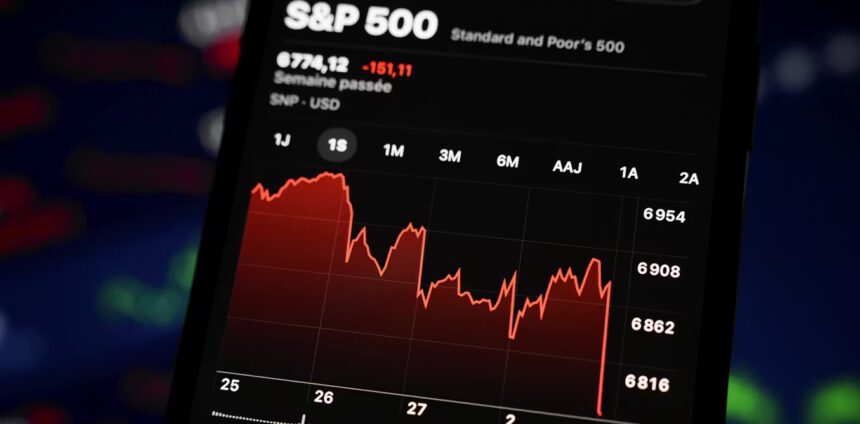
With reduced economic activity, corporate profits can dwindle, further complicating the financial landscape. As investors grapple with uncertainty during geopolitical disturbances, they typically demand higher returns for the risks they are taking, leading to a drop in share prices. KiwiSaver funds, with significant investments in both local and global stock markets, mirror these trends, causing many New Zealanders to observe diminishing balances in their retirement accounts.
For those concerned about their KiwiSaver investments, the prevailing advice is to take a long-term perspective and resist the urge to react impulsively to short-term market fluctuations. While it can be distressing to see account balances shrink, history suggests that stock markets are resilient entities. Past oil shocks, such as the 1973-74 OPEC crisis and the first Gulf War in 1990, resulted in initial economic turmoil but eventually led to recovery.
KiwiSaver is fundamentally a long-term investment. Even individuals nearing retirement can expect to live several decades beyond their official retirement age. Unless immediate access to funds is required, the current market turmoil is likely to be just a minor blip when viewed through a 10- or 20-year lens. Historical trends show that even significant downturns, such as those seen in the 1970s, hardly detract from the overall upward trajectory of market performance.
Investors in higher-risk KiwiSaver funds, typically those emphasizing growth, may feel the effects of volatility most acutely. However, such funds have historically provided greater returns. Since the inception of KiwiSaver in 2007, participants have navigated through various crises, including the global financial downturn and the pandemic, yet have seen average cumulative returns of around 240%. This far exceeds what safer investments would have generated during the same timeframe.
Interestingly, market volatility can work in favor of long-term investors. Most KiwiSaver contributions are invested regularly, often coinciding with payday, allowing contributions to be deployed into the market consistently rather than attempting to time investments perfectly. During market dips, contributions buy more shares, enhancing potential gains when prices eventually recover.
For instance, a KiwiSaver member contributing around $100 monthly could buy ten shares at $10 each. If the share price drops to $5 in the following month, that same $100 can now purchase 20 shares. Over time, this phenomenon—referred to as “dollar-cost averaging”—illustrates that the time spent in the market is more critical than trying to predict optimal entry points.
Amidst current uncertainties and projections of short-term challenges, KiwiSaver investors should consider these fluctuations as mere background noise in their long-term financial narrative. In a worst-case scenario of a permanent market collapse, the implications would extend far beyond retirement savings, underscoring the broader economic stability concerns for all.