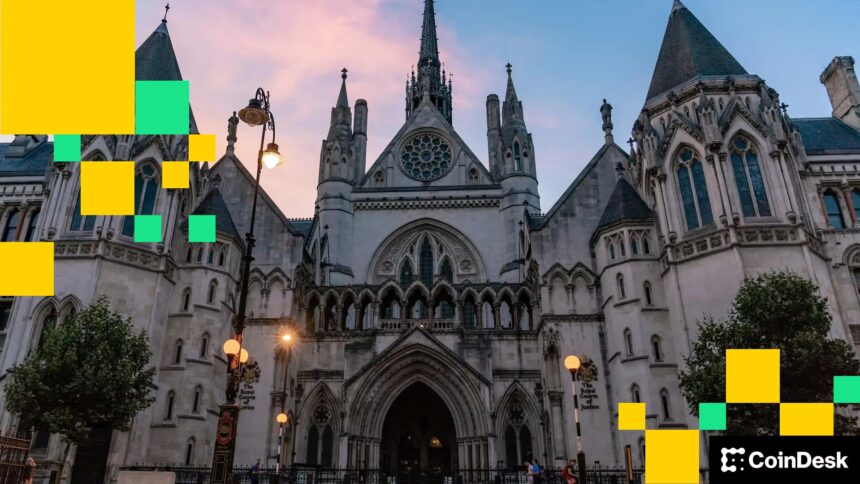
A significant legal case has emerged in the U.K. concerning the alleged theft of over 2,323 bitcoin, which has prompted discussions about how traditional property law applies to cryptocurrency. The High Court recently permitted the lawsuit initiated by U.K. resident Ping Fai Yuen against his estranged wife, Fun Yung Li, to go ahead.
In court filings, Yuen asserted that Li utilized CCTV cameras in their home to covertly obtain the recovery phrase for his hardware wallet, facilitating the unauthorized transfer of a substantial bitcoin amount in August 2023. At the time of the alleged incident, the bitcoin was valued at nearly $60 million, with current market valuations placing it around $172 million due to the recent rise in cryptocurrency prices.
The bitcoin in question was stored in a Trezor cold wallet, secured by a PIN. However, the court highlighted that anyone possessing the 24-word recovery phrase could replicate the wallet and access the funds. Following the transfer, the bitcoin was dispersed across 71 blockchain addresses, none of which are held at exchanges. Notably, these funds have remained dormant since December 21, 2023.
In a twist of events, Yuen later installed audio recording devices at his residence after being alerted by his daughter about Li’s intentions concerning the bitcoin. Upon discovering the unauthorized transfer, he confronted Li and subsequently assaulted her. This incident led to Yuen pleading guilty in 2024 to charges of assault occasioning actual bodily harm, along with two counts of common assault. Though authorities seized several hardware wallets and recovery seeds during a search of Li’s home, no further action was pursued pending the emergence of new evidence.
Li sought to have the case dismissed, arguing that Yuen’s primary claim of conversion—a legal term traditionally applied to physical property—was inapplicable to digital assets like bitcoin. The judge acknowledged this argument but allowed the case to proceed under alternative legal claims that may enable Yuen to recover the bitcoin if his allegations are substantiated.
With the matter now proceeding to trial, this case not only encapsulates a personal dispute but also underscores the challenges that the legal system faces in adapting traditional laws to emerging digital asset realities.