The U.S. stock market is navigating through turbulent waters linked to the ongoing U.S.-Iran conflict, displaying a mixed response in key indices. Currently, the S&P 500 is showing resilience, up more than 1% week-to-date, while the Cboe Volatility Index (VIX) has dipped to approximately 23 from previous highs exceeding 35. This suggests a reduction in market anxiety, although the S&P 500 remains in a neutral position regarding momentum, as indicated by its 14-day relative strength index (RSI) resting at 42 — squarely between the oversold and overbought thresholds.
Financial analyst Frank Cappelleri, founder of CappThesis, pointed to this week’s RSI reading as notably low for a Federal Reserve decision day, the first such occurrence since March 2025 when the RSI was at 37. At that time, the market was undergoing a countertrend bounce after experiencing an 11% decline from its peak in February.
Cappelleri elaborated on the historical context, recalling that while there was an initial market uptick following that Fed meeting, it was short-lived and ultimately led to a more significant downturn of 20% over two months due to the fallout from U.S. tariff policies. Many investors are adopting a cautious outlook for the current situation, with skepticism about any immediate rebound.
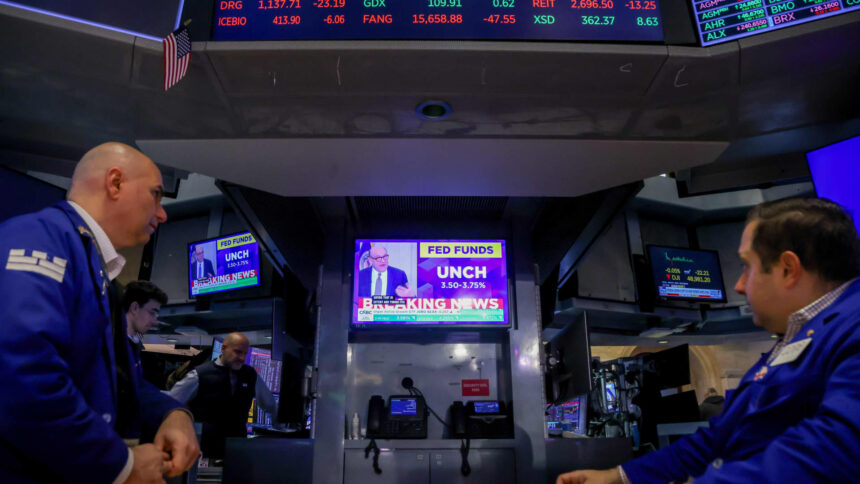
Expectedly, the Federal Reserve is anticipated to maintain its current overnight lending rate in the upcoming meeting, with minimal changes in its economic projections, which guide future interest rate expectations.
As the S&P 500 has seen a notable loss of momentum throughout this year, peaking at around 63 in January before declining, current sentiment on Wall Street reveals concerns about the potential for a significant market drop before any lasting recovery takes shape. The Morgan Stanley trading desk highlighted the urgent need for a “prototypical clearing event,” despite observable positive signals from influential industry figures and a lack of destructive demand trends.
Goldman Sachs’ Tony Pasquariello expressed worries that the market may be underestimating possible downside risks, noting a surprising lack of concern among market participants. Similarly, Michael Hartnett, a strategist at Bank of America, indicated that their sentiment indicators are not yet sufficiently bearish to suggest the conclusion of the recent selling trend.
Overall, while the S&P 500 remains close to its all-time high, cautious sentiments from key financial analysts and institutions suggest that investors should brace for potential turbulence ahead.