U.S. stocks are experiencing a significant downturn, prompted by a report indicating that inflation is likely to worsen, exacerbated by rising oil prices stemming from the ongoing conflict in Iran. The S&P 500 has dropped 1.1%, while the Dow Jones Industrial Average was down 668 points, or 1.4%, with just an hour left in trading. The Nasdaq composite has also witnessed a 1.1% decrease.
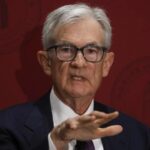
The situation worsened following the Federal Reserve’s decision to maintain its main interest rate, rather than resume cuts aimed at stimulating the economy and supporting the job market. While Fed officials anticipate one potential rate cut by the end of 2026, Chair Jerome Powell cautioned that these projections may be less reliable due to increased uncertainty surrounding factors like oil prices and the longer-term impacts of tariffs on the economy. “We just don’t know,” Powell remarked, highlighting the unpredictability of these circumstances.
Concerns have risen that the Federal Reserve may not implement any cuts at all in 2026, especially given the dramatic rise in oil prices. A barrel of Brent crude has surged from around $70 to nearly $110, closing at $107.38 for the day, an increase of 3.8%. Likewise, benchmark U.S. crude reached close to $99 before settling at $96.32. This spike in oil and natural gas prices has been attributed to disruptions in the Persian Gulf’s energy sector due to the conflict. Iran’s state media reported intentions to target oil and gas infrastructure in neighboring countries, further complicating the situation.
The ramifications of these price increases may lead to a wave of inflation impacting the global economy if they persist. A newly released report revealed that inflation at the wholesale level unexpectedly accelerated last month to 3.4%, raising concerns that these cost hikes could affect U.S. households if passed on by producers.
This inflation data likely played a pivotal role in the Federal Reserve’s choice to hold rates steady, despite ongoing calls from President Trump for cuts to encourage investment. Only one Federal Reserve official advocated for lower rates in the recent meeting, with an overwhelming consensus of 11-1 to keep rates unchanged. Powell pointed out that while the Federal Reserve has historically overlooked spikes in oil prices as temporary, this only holds if inflation expectations do not escalate.
Additionally, the anticipation of interest rate changes influenced movements in the bond market. The yield on the 10-year Treasury note climbed to 4.25%, reflecting the rising expectations linked to inflation statistics. This uptick in yields has made gold—traditionally viewed as a safe haven—less appealing to some investors, leading to a decline in precious metal prices. Gold prices fell 2.2% to settle at $4,896.20 per ounce, which is lower than its value at the start of the conflict despite its reputation as a safe investment during uncertain times.
On the corporate front, Macy’s shares jumped 5.1% after reporting better-than-expected profits and revenue for the latest quarter, indicating success in its turnaround strategy under CEO Tony Spring. Conversely, General Mills saw a decline of 2.8% after revealing weaker profit figures than anticipated, though it remains committed to its growth strategy under CEO Jeff Harmening.
Abroad, European indexes mirrored the decline observed in the U.S. markets, while Asian markets had a somewhat stronger performance. Japan’s Nikkei 225 rose by 2.9% following a report highlighting unexpected growth in exports for February, while South Korea’s Kospi surged by 5%.
Overall, investors are closely watching the developing geopolitical situation and its economic implications, as well as the Federal Reserve’s response to evolving inflation dynamics.