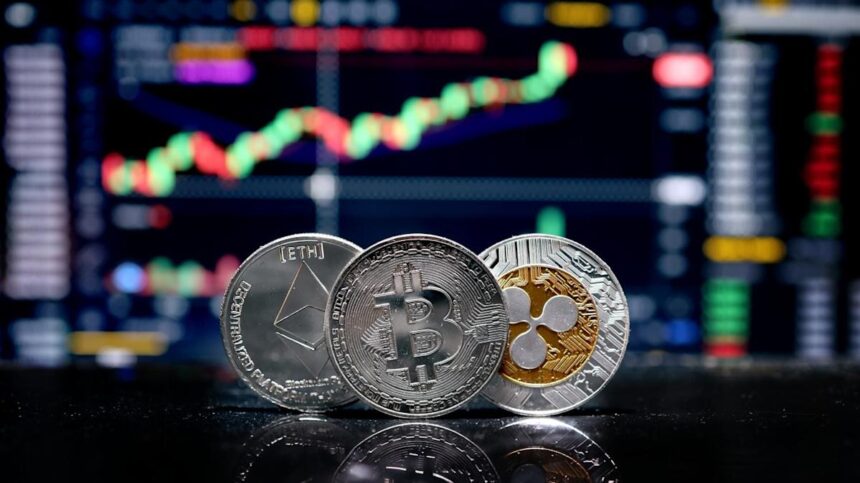
ChatGPT has ranked Bitcoin as the most promising cryptocurrency for investment in 2026, projecting a significant return of 42%, which could see its price rise to approximately $105,000. Following Bitcoin, XRP is placed second with an expected return of 32%, potentially reaching around $2.00, while Ethereum is ranked last with an anticipated return of 20%, pushing its price to roughly $2,800.
The backdrop for these predictions comes after a considerable downturn for Bitcoin, Ethereum, and XRP, each experiencing declines between 40% to 60% from their 2025 peak values. With the market now on the brink of recovery, investor interest has surged regarding which of these three assets offers the best opportunities moving forward.
To ensure a fair evaluation, ChatGPT was asked to assess these cryptocurrencies and share the investment outlook based on current market conditions. The AI model highlighted Bitcoin’s robust institutional backing and its significant yearning from investors, even as its price remains down by 42% from its all-time high of $126,000. Notably, the introduction of U.S. spot Bitcoin ETFs has played a crucial role, attracting $56.14 billion in net inflows since their launch, with total assets now nearing $91.83 billion. Inflows from these ETFs recently reached $767 million over just one week, reversing previous outflow trends.
Furthermore, the anticipated supply constraint due to the upcoming Bitcoin halving planned for April 2024 is expected to reduce daily Bitcoin production from 900 BTC to 450 BTC. This reduction will lower the annual inflation rate to 0.83%, suggesting that the balance between supply and demand favors Bitcoin’s price appreciation. However, ChatGPT warns that macroeconomic factors remain a critical risk, including high oil prices, sustained Federal Reserve interest rates of 3.5% to 3.75%, and ongoing geopolitical instability, all of which could hinder progress towards the predicted price target.
In the case of XRP, recent regulatory developments have altered its investment landscape, positioning it second in ChatGPT’s rankings. The SEC and CFTC jointly classified XRP as a digital commodity, thus ending a prolonged period of regulatory uncertainty that has hampered its market potential since the lawsuit initiated against Ripple in 2020. This recent clarity may empower exchanges that had previously delisted or restricted XRP to reintroduce it without concerns. Consequently, XRP has shown bullish signs, breaking resistance levels and experiencing heightened trading volume.
Despite the positive regulatory changes, ChatGPT notes that institutional demand for XRP has not yet materialized. While the RippleNet platform has been adopted for cross-border transactions, banks are reportedly favoring Ripple’s own stablecoin, RLUSD, due to concerns about XRP’s price fluctuations. As a result, any significant push towards the projected $2.00 mark will likely depend on the emergence of real institutional buying in the marketplace.
Ethereum was placed last in the ranking due to its current challenges despite its reputed long-term potential. ETH has dropped significantly from its all-time high and is experiencing waning demand tied to increased migration of transactional activity to layer-2 networks that offer lower fees. This shift has contributed to a decline in transaction fee revenue on Ethereum’s base layer, undermining one of the value propositions that previously supported its price position. Additionally, Ethereum is now facing inflationary pressures as transaction fees are not sufficiently high to drive the burning mechanism that previously promoted scarcity.
Although Ethereum preserves the strongest development ecosystem among blockchains, the potential for upside in its price will likely hinge on recovering transaction volumes and institutional interest.
Overall, while Bitcoin is regarded as the safest investment among the three due to existing institutional flows, XRP holds compelling potential driven by regulatory success, and Ethereum, although ranked last, may offer significant long-term benefits if its current challenges are addressed effectively.
In parallel, another recent study has highlighted a single habit that has doubled retirement savings for many Americans, suggesting a broader conversation about financial preparedness and retirement planning. This habit transcends traditional advice about increasing income or cutting expenses, indicating a need for a shift in mindset toward retirement savings strategies.