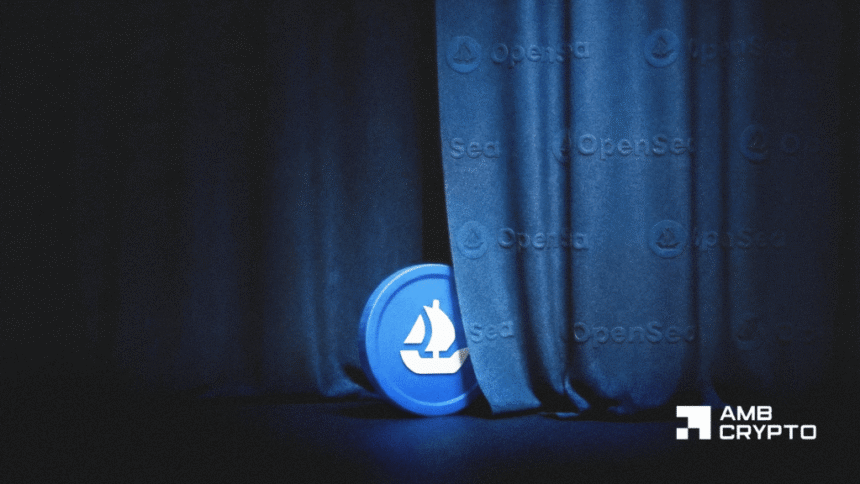
In a significant development within the cryptocurrency landscape, OpenSea CEO Devin Finzer announced a delay in the anticipated launch of the $SEA token, initially slated for March 30. The decision arises from ongoing challenges in market conditions across the crypto sector. Finzer expressed the importance of timing in such launches, emphasizing that the $SEA token would only be launched once, and it is essential to do so under more favorable circumstances.
In his communication on X, Finzer stated that the launch timeline was being pushed back and acknowledged the impact of this decision on the community, saying, “a delay is a delay. I’m not going to dress it up,” signaling the seriousness of the situation. Instead of rushing the launch during periods of market weakness, OpenSea has outlined several strategic initiatives to maintain user engagement.
Starting March 31, the platform will implement a temporary trading fee reduction to 0% for 60 days, aiming to stimulate activity and attract users to its mobile app and perpetual Futures platform. Additionally, OpenSea is providing fee refunds to users who participated in trading during its Rewards Waves 3 to 6. However, those claiming refunds must relinquish the “Treasures” points they accrued during that time.
In a move to streamline user engagement, OpenSea will discontinue the “Waves” rewards system. The departure from constant point-farming initiatives is aimed at establishing a more structured timeline governed by the OpenSea Foundation.
Adam Hollander, the Chief Marketing Officer of OpenSea, supported Finzer’s decision, highlighting the inherent difficulties in making such choices. He noted that the most challenging decisions often involve short-term pain and a strong belief in a longer-term vision. Hollander emphasized the commitment to rebuilding trust with users, acknowledging the sacrifices being made.
The decision to delay the $SEA token launch is intricately linked to the current state of the NFT market, which, despite maturing, has seen a significant decrease in size and liquidity compared to the peak observed in 2021. The global NFT market cap stands at approximately $1.75 billion, a stark contrast to previous highs. Although the market cap has seen a slight increase of around 4% in a single day, the daily sales volume remains limited at roughly $1.73 million.
Furthermore, while trading volume has experienced a notable rise of 39.1%, activity remains heavily concentrated in a handful of well-known NFT collections, indicating a market characterized by rapid trading yet lacking depth. This trend is mirrored in the broader cryptocurrency market, which is also experiencing a slowdown. The crypto Fear and Greed Index currently indicates a cautious sentiment, residing within the ‘fear’ zone but slightly recovering from previous ‘extreme fear’ levels.
By postponing the release of the $SEA token, OpenSea appears to be adopting a prudent strategy to avoid launching its major token during a time of low buying demand. The overarching goal is to ensure that both the platform’s conditions and market demand are optimally aligned for the launch, taking lessons from the current climate into consideration.
In conclusion, OpenSea’s choice to delay the $SEA token underscores the critical nature of launching tokens amid strong market demand. The shift in strategy reflects the realities of an NFT market that is smaller and less liquid compared to the highs of 2021, compelling platforms to adapt and refine their approaches.