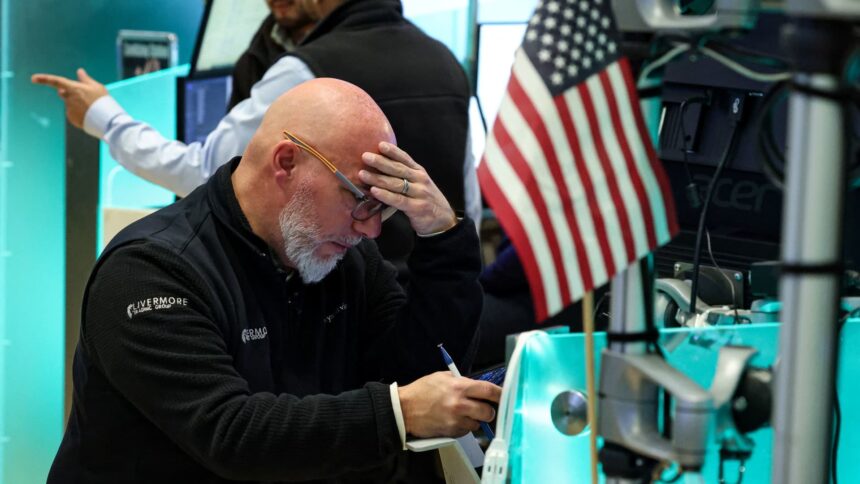
The stock market continues to face significant challenges, with major indices such as the S&P 500, Nasdaq, and Dow Jones each experiencing their fourth consecutive week of declines. This downturn is being fueled by escalating tensions in the Middle East, particularly the ongoing conflict involving Iran, alongside surging wholesale inflation which has heightened economic anxieties among investors.
During the past week, the S&P 500 fell by 1.5%, while both the Nasdaq and Dow saw a drop of approximately 2%. Notably, both indices briefly entered correction territory at 10% down before recovering slightly by the end of the week. The volatility in oil prices, particularly following U.S. and Israeli airstrikes in Iran, has played a critical role in this market fallout. The situation remains precarious, leading analysts to suggest that unless key issues are resolved, such as the opening of the critical oil transport route in the Strait of Hormuz, the market may struggle to regain its footing.
Despite these challenges, there were some vibrant developments in the tech sector, particularly during Nvidia’s GTC developers event, which featured an array of optimistic initiatives. However, these announcements did little to boost Nvidia’s stock, which ended the week down by 4%. Investors’ attention is increasingly focused on Nvidia as a bellwether for advancements in artificial intelligence, especially as it remains the largest publicly traded U.S. company by market capitalization.
Memory chip manufacturer Micron also made headlines with its latest earnings report, which highlighted the severity of the global memory shortage, a situation exacerbated by rising demand driven by AI technologies. Micron’s revenue nearly tripled, but CEO Sanjay Mehrotra cautioned that the company is only able to meet 50% to two-thirds of the demands from major clients due to supply constraints. This memory crunch poses challenges for hardware companies that depend on these essential components. For example, HP’s stock found itself at a 52-week low after projecting lower annual profits, partly attributable to escalating memory prices. In contrast, Apple has managed to outperform the market, with its stock down less than 9% year to date, largely due to effective pricing strategies that have attracted customers despite overall industry pressures.
Amid the unfolding market conditions, Jim Cramer’s investment strategy has shifted. With many stocks appearing undervalued, his team has taken advantage of the downturn to invest in companies like Goldman Sachs and Boeing, among others. The strategy hinges on the expectation that even modest positive developments could inspire a rally in these stocks.
The pressures of inflation loomed large throughout the week, further complicating market sentiment. Recent reports indicated that wholesale prices rose more than analysts had anticipated. Fed Chair Jerome Powell indicated that inflation rates are not declining as swiftly as hoped, which compounds the existing concerns stemming from the conflict in the Middle East. The producer price index rose by a seasonally adjusted 0.7%, significantly above the projected 0.3% increase, underscoring the potential for inflation to impact economic stability.
In summary, the stock market faces a challenging landscape shaped by geopolitical tensions, rising inflation, and particular vulnerabilities within the memory sector—all factors that investors will be monitoring closely in the weeks ahead. As uncertainties persist, analysts remain cautious about the potential for recovery, particularly with the escalating complexities brought about by global events.