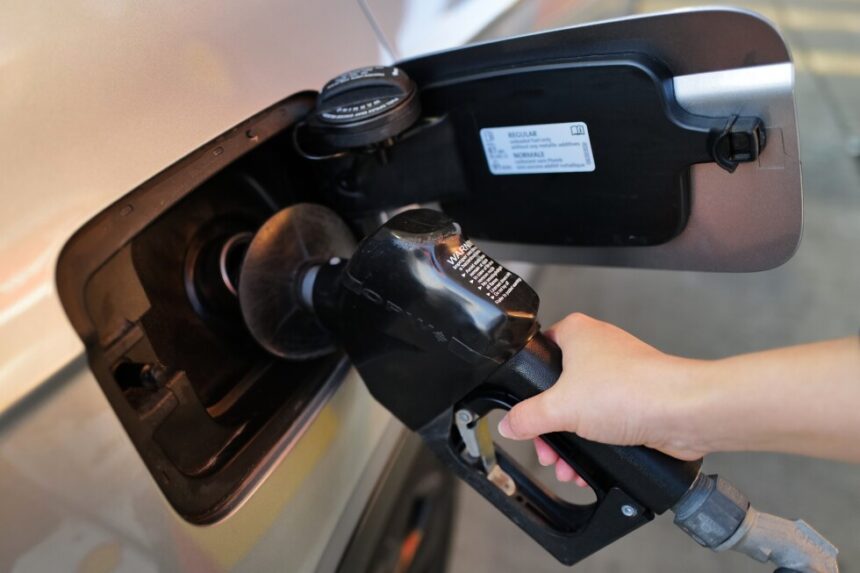
The economic landscape for U.S. households is projected to undergo significant changes due to rising gas prices, overshadowing the anticipated benefits of increased tax refunds stemming from recent tax reforms. Initially, these refunds were expected to provide a substantial boost to consumer spending as the nation entered the new year. However, the outbreak of conflict in Iran at the end of February has led to unprecedented spikes in oil and gas prices, undermining this optimistic outlook.
As of this past Sunday, the nationwide average gas price has surged to $3.94—a striking increase of over a dollar in just a month. Economists warn that even if the conflict were to resolve swiftly, supply chain disruptions in shipping and production will take time to mend, leaving consumers facing prolonged high prices at the pump. This sets the stage for what many analysts anticipate will be a sluggish growth trajectory for the spring and potentially for the entire year.
Particularly vulnerable are lower and middle-income families, who typically see smaller tax refunds but allocate a larger portion of their budgets to fuel expenses. Alex Jacquez, chief of policy at the Groundwork Collaborative, notes that this energy crisis will hit those with the least financial cushion hardest. “It doesn’t look like those tax refunds are going to be here to save them,” he remarked.
Neale Mahoney from the Stanford Institute for Economic Policy Research forecasted that gas prices might peak around $4.36 a gallon come May, which could result in the average household incurring approximately $740 more in gas expenses this year. This figure closely mirrors the projected $748 increase in tax refunds estimated by the Tax Foundation. Conversely, IRS data suggests that year-to-date refunds have only averaged $3,676—an increase of $352 from last year, indicating that gains may not fully materialize as complex tax returns continue to be processed.
Further complicating matters, economists at Oxford Economics suggest that if gas prices remain at an average of $3.70 throughout the year, consumers could face costs totaling around $70 billion—exceeding the anticipated $60 billion increase in tax refunds. This situation arises amid a consumer environment still recovering from the financial lockdowns of the pandemic, where households previously benefited from stimulus payments and aggressive hiring practices. In stark contrast, the current job market is witnessing a stagnation in hiring, coupled with a declining savings rate as families increasingly resort to credit and alternative payment plans to make ends meet.
The economic disparity is further illuminated by a “K-shaped” recovery narrative, where higher-income households continue to perform well while lower-income families struggle significantly. Estimates suggest that the lowest 10% of earners allocate nearly 4% of their incomes to gasoline, while the top 10% spend merely 1.5%.
Despite these challenges, analysts remain cautiously optimistic about the U.S. economy’s potential to expand this year, albeit at a reduced pace. While soaring gas prices are likely to exacerbate inflation in the short term, the gradual decline in consumer spending could ultimately counterbalance that inflationary effect. Historical data shows that American consumers have demonstrated resilience against various economic shocks, maintaining their spending habits despite rising costs.
Recent figures from the Bank of America Institute reported a 14.4% increase in spending on gas compared to last year, a notable rise following a pre-war trend that was already lagging behind previous spending levels. Nevertheless, sales in discretionary categories like dining out and travel continue to grow, albeit without any signs of acceleration that economists had hoped for.
As the situation evolves, experts like David Tinsley warn that persistent high gasoline prices could increasingly restrain discretionary consumer spending. Additionally, forecasts regarding the economy’s growth are undergoing downward revisions, with estimates falling from 2.5% to 1.9% for the year, reflecting broader concerns about the implications of sustained gas price hikes.