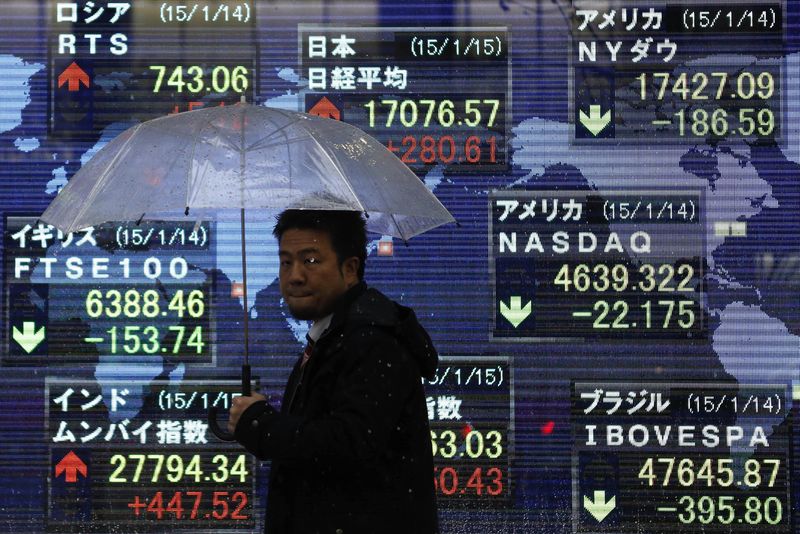
Asian stock markets experienced a sharp decline on Monday, primarily driven by escalating tensions surrounding the U.S.-Israel conflict with Iran. President Donald Trump’s recent ultimatum to Tehran added to apprehensions, prompting investors to step back from risk-sensitive assets.
Japan and South Korea emerged as the weakest performers in the region, raising concerns about their vulnerability to potential disruptions in global energy supplies. This is particularly critical for these nations and India, given their reliance on energy imports. Persistent worries regarding rising oil prices fueled fears of prolonged global inflation and more aggressive approaches from central banks, further pressuring the markets. Oil prices remained strong during Asian trading hours.
The negative sentiment in Asian markets followed a lackluster lead from Wall Street, which has witnessed four consecutive weeks of losses, reflecting the ongoing instability in the Middle East. Major indexes in Japan tumbled between 2.8% and 3.5%, while South Korea’s benchmark index plummeted nearly 5%, marking it as the worst performer in the region.
South Korea’s market suffered particularly due to expectations surrounding a potential shift towards a more hawkish stance from the Bank of Korea. The appointment of economist Shin Hyun-song as the new Governor has raised concerns, as he has previously voiced warnings against excessive lending and inflation. Analysts from ING characterized this appointment as likely enhancing the chances of an interest rate hike from the central bank later this year.
Across broader Asian markets, risk appetite diminished due to the deteriorating situation in the Middle East. The conflict between the U.S. and Iran marked its fourth week without signs of resolution. Over the weekend, Trump issued a stark warning—Iran had 48 hours to reopen the Strait of Hormuz, or else the U.S. would take drastic measures against its energy infrastructure. In response, Iran threatened to target significant energy and water facilities throughout the Middle East while indicating intentions to fully close the Strait should the U.S. follow through on its threats.
In regional stock movements, Hong Kong’s index dropped by 3.1%, and both China’s major indexes fell around 2%. Australia’s benchmark decreased by 0.7%, while Singapore’s market index saw a decline of 1.8%. India’s index also slipped, concluding the day down by 0.3%.
The escalating conflict, coupled with rising energy costs and concerns of inflation, is casting a long shadow over the Asian markets, leaving investors to navigate a challenging landscape.