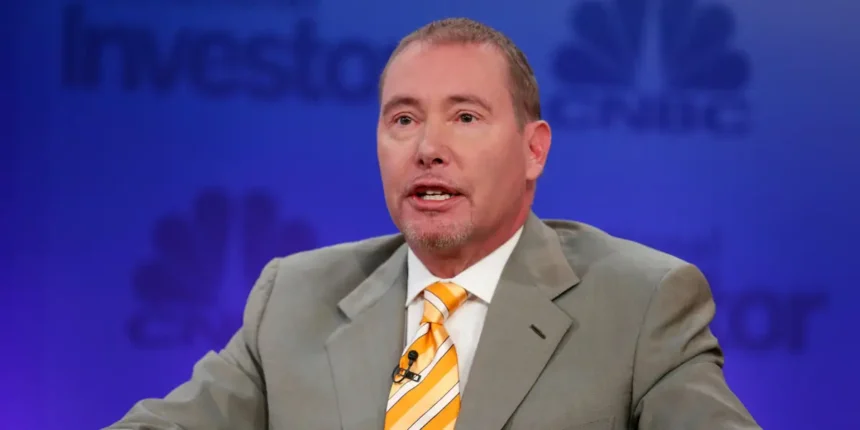
In the ever-evolving landscape of financial markets, one key indicator is currently capturing the attention of investors: the VIX index, often referred to as the market’s “fear gauge.” Jeff Gundlach, the renowned fixed-income investor and Chief Investment Officer at DoubleLine Capital, believes this measure of market volatility could significantly influence stock performance in the coming months.
Speaking on CNBC, Gundlach highlighted the importance of monitoring the VIX to assess the market’s future trajectory. He noted that if the VIX were to exceed a level of 40, it could indicate that the worst of the recent sell-off has passed, potentially signaling to sidelined investors that it may be time to re-enter the market. “If the VIX gets above 40, you know, maybe that’s your signal that things are washed out and it’s time to buy,” he stated. However, he clarified that he would prefer to wait for a more definitive “real wash out” in stocks before making any significant additions to his portfolio.
The VIX has experienced an uptick since the onset of the US-Israeli conflict involving Iran, climbing to over 29 in early March—an increase of 10 points from pre-conflict levels. Nevertheless, this figure remains considerably lower than the critical threshold Gundlach has identified. Should the index reach 40, it would reflect the highest volatility levels seen since last year’s notable market crash labeled as “Liberation Day.”
Gundlach characterized the current market environment as a “revaluation phase,” during which asset prices are being adjusted across various sectors. He pointed out the recent downturn in gold prices, which had gained considerable traction in early 2025 but has since entered a bear market, dropping over 20% from its peak in January. Despite this decline, Gundlach indicated there could be a timely opportunity for investors to consider increasing their holdings in gold and other commodities. However, he remained cautious about stock and bond valuations, suggesting they do not yet appear “cheap enough” to warrant immediate investment.
Despite the turbulence linked to the disruption caused by AI advancements and ongoing geopolitical tensions, the S&P 500 is only down about 4% year-to-date. Gundlach conveyed a level of caution, expressing that he is “not terribly enthusiastic about credit or stocks at this point” and reiterating the need for the VIX to rise further before he would feel comfortable investing.
Other analysts echo Gundlach’s sentiment, suggesting stocks may still face additional downside risk before stabilizing. Last week, Morgan Stanley projected a potential 7% decline in equities before a market bottom is reached, while Goldman Sachs alerted its clients to the possibility of a deeper stock correction amid the persistent unrest in the Middle East. As investors navigate this uncertain terrain, the interplay of the VIX and geopolitical developments is likely to play a crucial role in shaping market dynamics in the near term.