The recent developments in U.S.-Iran relations have introduced a wave of confusion and volatility in global markets. This week, while the U.S. government presented a narrative of diplomatic progress, Iranian officials firmly rejected any interest in direct negotiations, resulting in mixed signals for investors trying to navigate these uncertain waters.
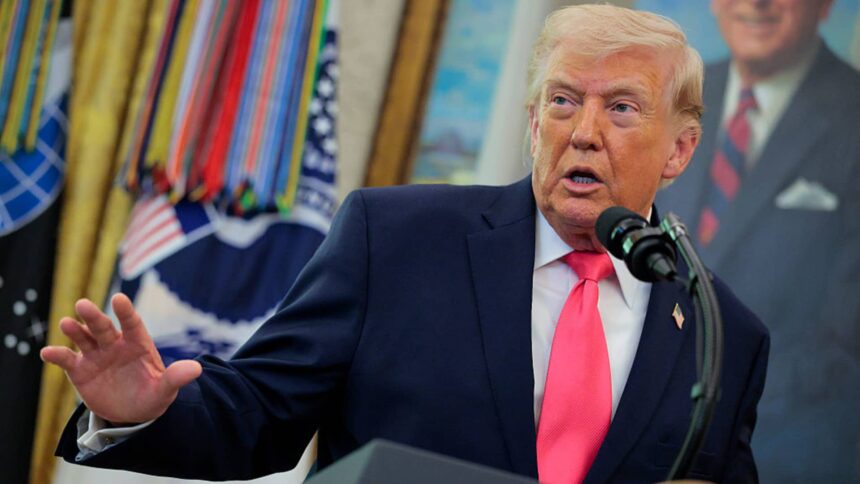
Markets initially surged after President Donald Trump announced that the U.S. and Iran were “in negotiations right now,” hinting at the possibility of a peace agreement. This announcement sent oil prices down and buoyed equity markets, reflecting investment sentiments highly sensitive to the fluctuating rhetoric around the situation. However, Tehran’s swift denial of any negotiations quickly turned optimism into skepticism about a genuine diplomatic resolution.
Billy Leung, an investment strategist at Global X ETFs, noted that investors are grappling with dual narratives: the prospect of diplomatic resolution versus the impending threat of energy supply disruptions, particularly in the critical Strait of Hormuz. “Markets are struggling because they are trying to price two competing paths at once,” Leung remarked.
Amidst this backdrop, earlier reports emerged detailing a proposal from the U.S. comprising over a dozen points aimed at de-escalating hostilities. However, Iranian officials dismissed these reports as “fake news.” This discrepancy raises questions about the true intentions of the Trump administration: Are they aiming for a comprehensive resolution or merely trying to manage tensions and prevent further escalation?
The Wall Street Journal, citing sources, indicated that Trump seeks to wrap up the conflict in the coming weeks, yet the gap between U.S. and Iranian demands remains substantial, particularly regarding sovereignty issues related to the Strait of Hormuz. Marko Papic, a geomacro strategist at BCA Research, emphasized that market reactions have been premature given the ongoing military activities in the region.
While U.S. stock indexes exhibited positive movement on Wednesday, oil prices remained under watch, with analysts cautioning against an overly optimistic view of the situation. The Pentagon’s plans to deploy thousands of troops to the Middle East could serve to heighten the conflict’s stakes, complicating an already volatile landscape.
Currently, markets associate “moderate credibility” to the possibility of a peace deal, though any hypothetical agreement might only hold for a limited time. The influence of Israel remains a critical variable, as sudden military actions from that country could further escalate tensions.
Investor sentiment has shown a strong reaction to the ongoing geopolitical developments, with analysts observing that thinner liquidity conditions have intensified market volatility. Ed Yardeni, president of Yardeni Research, pointed out that historical geopolitical crises have often presented opportunities for investors, advocating for a strategy of enduring the current market upheaval.
Yardeni compared the current Iran situation to other geopolitical issues he deems less significant, asserting that the economic implications of this conflict are much more pronounced. He advised investors to consider repositioning their portfolios to capitalize on potential declines in oil prices, suggesting sectors like airlines and home builders as potential beneficiaries.
Strategists from UBS have urged caution, advising against making trades based solely on geopolitical news and instead recommending a focus on strategic equity holdings. They recommend using market rebounds as a chance to rebalance portfolios by reducing exposure to vulnerable sectors and increasing investments in defensive assets.
The recent volatility across various asset classes has also prompted some investors to reassess their strategies and take advantage of favorable market conditions. Gautam Chadda from RBC Wealth Management highlighted the opportunity to acquire high-quality assets amidst the turmoil, suggesting that sectors such as fertilizers, defense manufacturing, and helium supply could gain from the situation.
Ultimately, the economic ramifications of the U.S.-Iran conflict are proving to be the key focus for markets. Robin Brooks of the Brookings Institution emphasized that irrespective of the political landscape, a scenario where oil supply stabilizes could lead to market optimism. However, he cautioned that prolonged uncertainty could transition from merely a price shock to material shortages, potentially stunting economic growth in unprecedented ways.
As the situation unfolds, investors are bracing themselves for a turbulent path ahead, wherein any breakdown in negotiations or further hostility could trigger a resurgence of volatility, complicating the economic outlook.